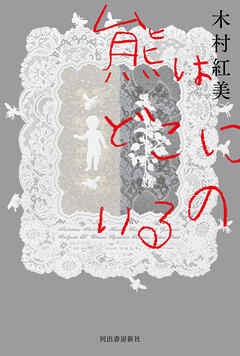
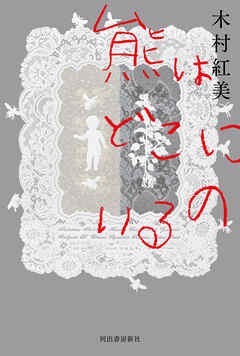
When she and I met in a music fan community, Kumi Kimura was a new author who had just debuted. Even though we aren't close friends and have never spent time together one-on-one, we share similar tastes in music and literature; we would often comment on each other's posts on mixi, the oldest social network in Japan. She was interested in my posts because my life back then was an absolute roller coaster, and the people around me were quite eccentric. She sometimes told me that my posts inspired her to write her novels. We would also sometimes hang out offline with other friends and sing karaoke all night long. That was about eighteen years ago — we were so young. Of course, I now prefer to sleep at night.
Ever since I left Tokyo in 2012, we haven't seen each other. She also moved back to her hometown in Iwate Prefecture, in the northeast of Japan. After her move, she started writing her highly acclaimed masterpiece, Where is the Bear?, which she says is her best novel. I've read almost all of her works, but this time, I was truly blown away — I literally, not figuratively, devoured it in one sitting. I always sensed her potential, but this has actually exceeded my expectations — it has finally come into full bloom. I'm truly happy for her, because I know the struggles she's faced over the years.
The story is about an abandoned baby and a group of women who have sought refuge in a house deep in the mountains to escape violence. No actual bear appears in the book — it's a metaphor for the potential of violence inside all of us. All the characters have complex backgrounds and carry deep emotional scars. I was able to relate to each and every one of them. I felt as if they were all a part of me, but the character I identified with the most was the abandoned baby boy who was raised by the women. He's still kind of a non-entity — he's so young that he hasn't developed a firm personality yet.
The novel is also quite fascinating in terms of its narrative technique. Kumi Kimura avoids describing the characters' physical appearances and gives them all only first names consisting of two morae (Japanese syllables), such as Ri-tsu, A-i, Yu-ki, Hi-ro and Sa-ki. And in a sense, much like the katakana used to write their names, each player in this story is distinct, making their names easy to remember like symbols. Interestingly enough, this allows you to lose yourself in the story, lending a sense of reality to the novel. She seldom visits Tokyo, but I want to share my thoughts with her one way or another.
The Japanese used in the novel is simple and easy to understand, so I highly recommend it as a resource for learning Japanese. If you're interested, you can read the beginning of the novel here:

The Japanese does indeed seem approachable. Thanks for the reco, I'll definitely check it out.
Very nice! Does sound like the kind of books I like to read, so I'll try it out one day
@schmamie @via-chan Awesome! It won't disappoint you.
I just finished it! I loved it. I'm a big fat liar, it's not really that approachable, but I was able to follow along nonetheless. Thanks again for recommending it!
@schmamie Thank you so much for reading my recommendation! I'm really happy you enjoyed it. Your Japanese reading skills are amazing!