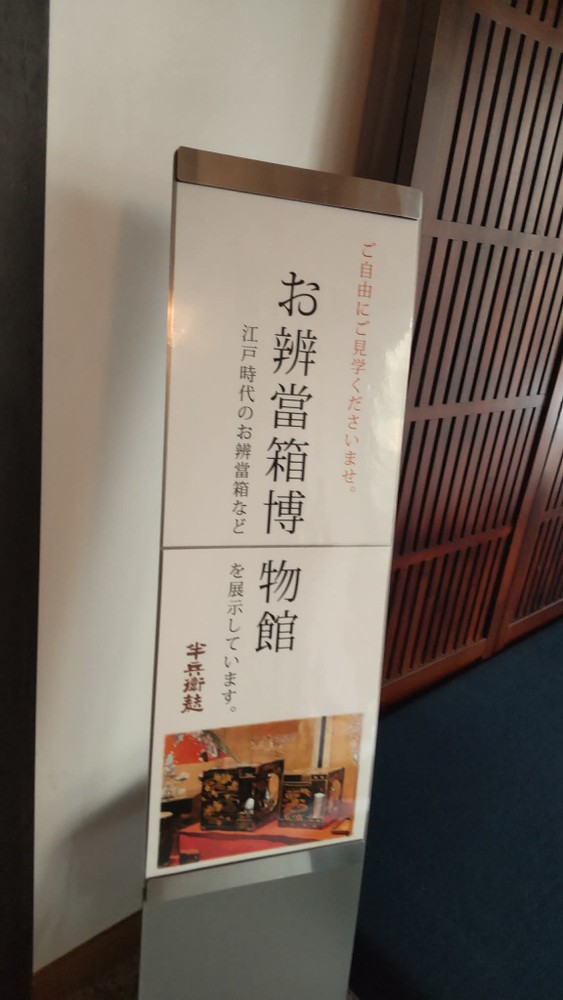
When a friend and I had lunch at a fu (wheat gluten) restaurant, we also visited its bento box (lunch box) museum. Bento boxes were born during the Heian period (794 to 1185), and during the Azuchi-Momoyama period (1568 to 1600), they became the shape we still use today. During the Edo period (1601 to 1868), they were decorated with maki-e (a Japanese lacquer decoration technique) or raden (one of the decorative techniques used in traditional crafts and woodwork). They got popular among the daimyo (feudal lords) and the kuge (aristocratic class), who loved having luxurious bendo boxes.
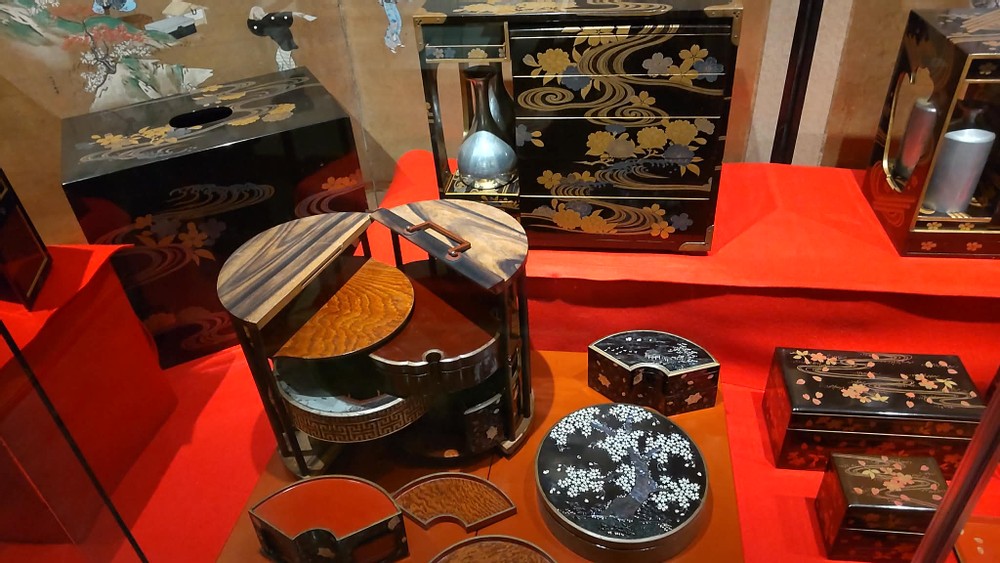
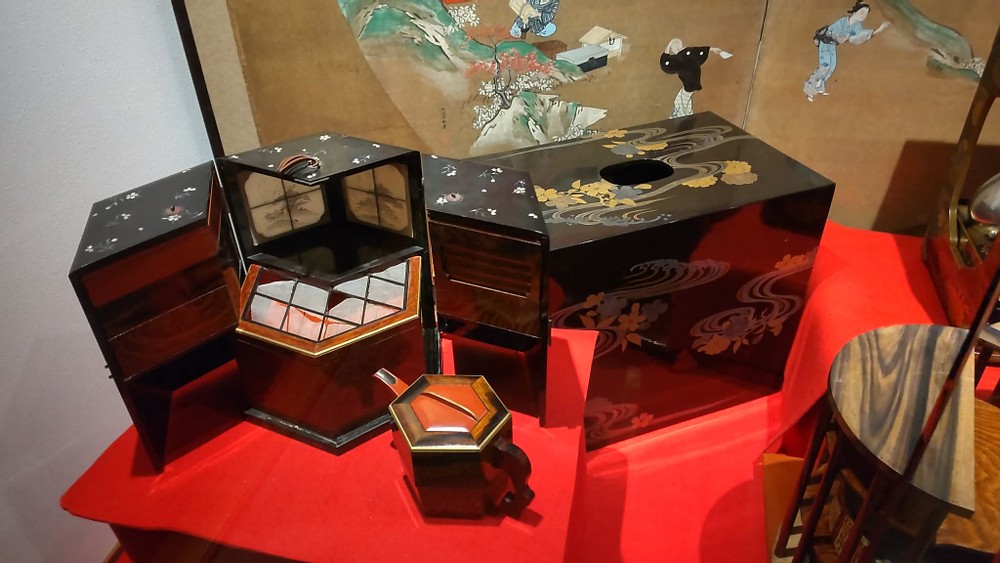
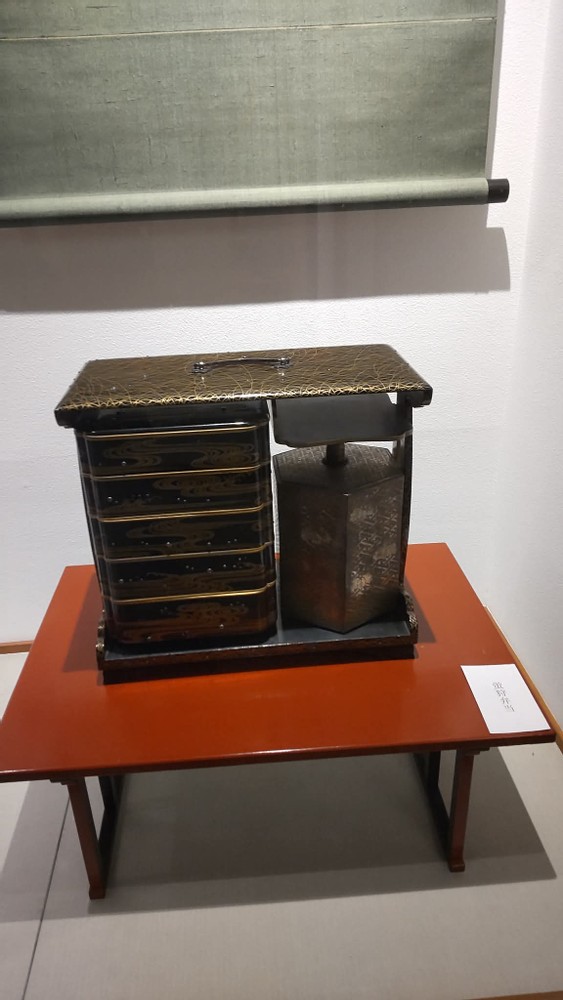
The picture below shows a sake set for picnics.
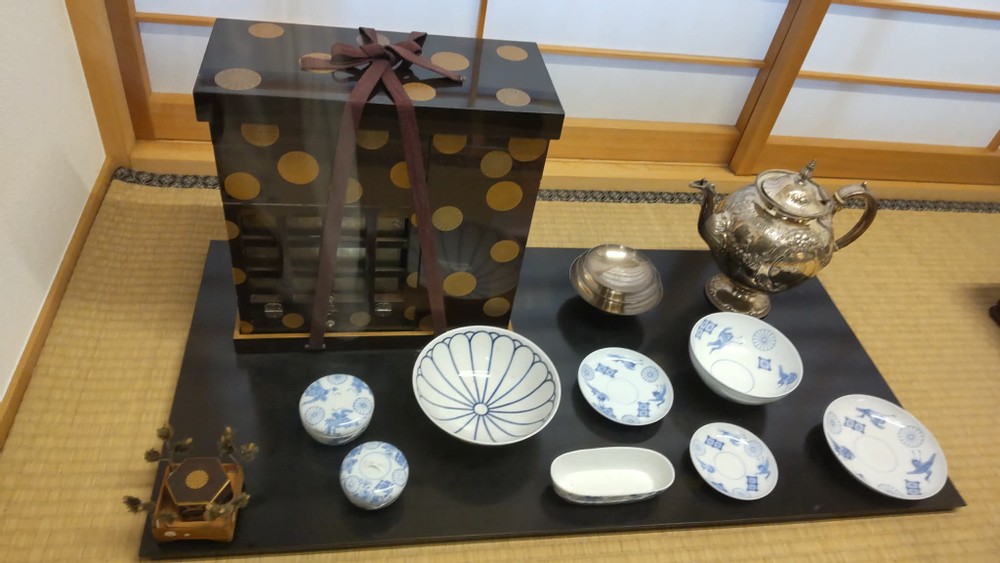
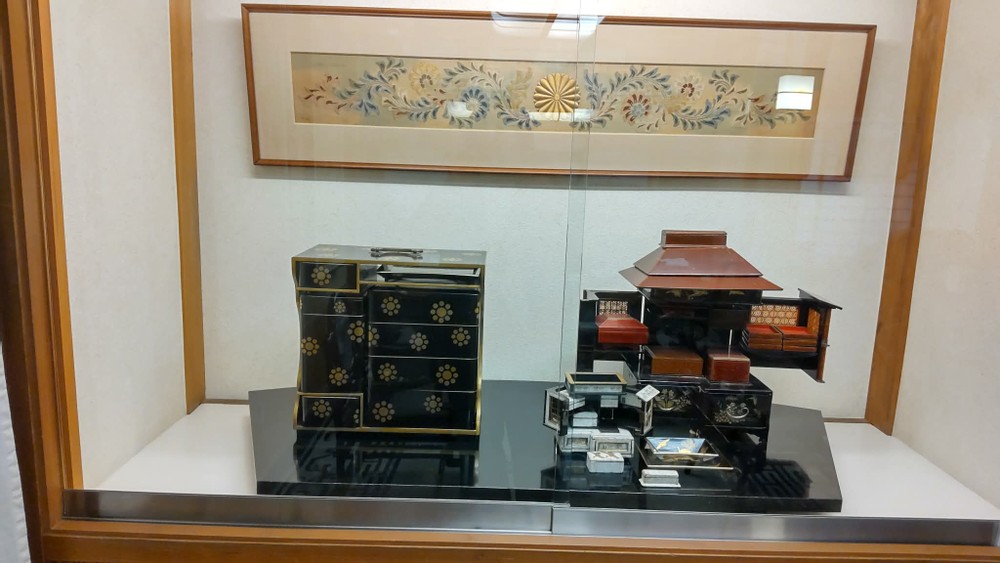
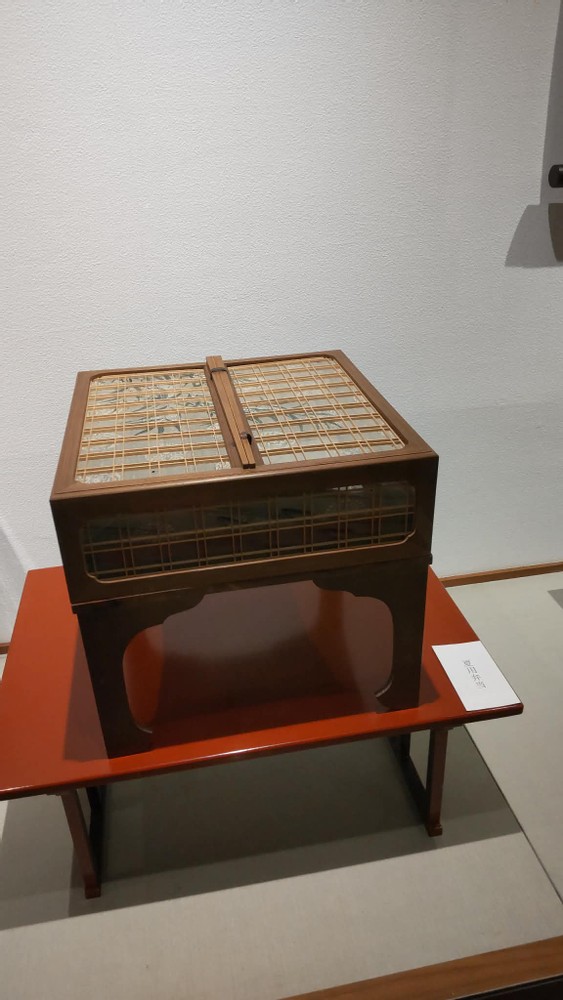
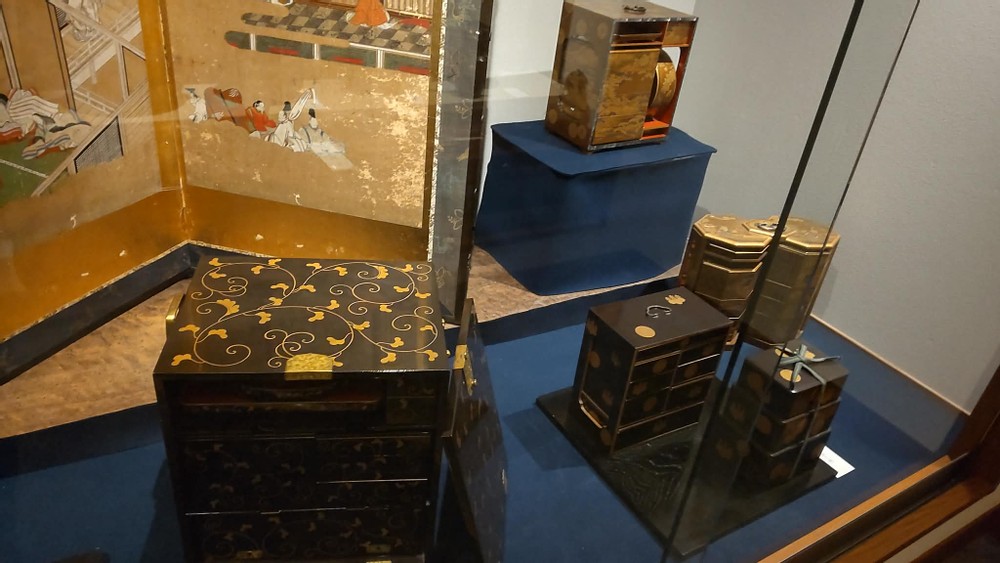
The museum we visited has collected lots of antique bento boxes, and looking around was fascinating.
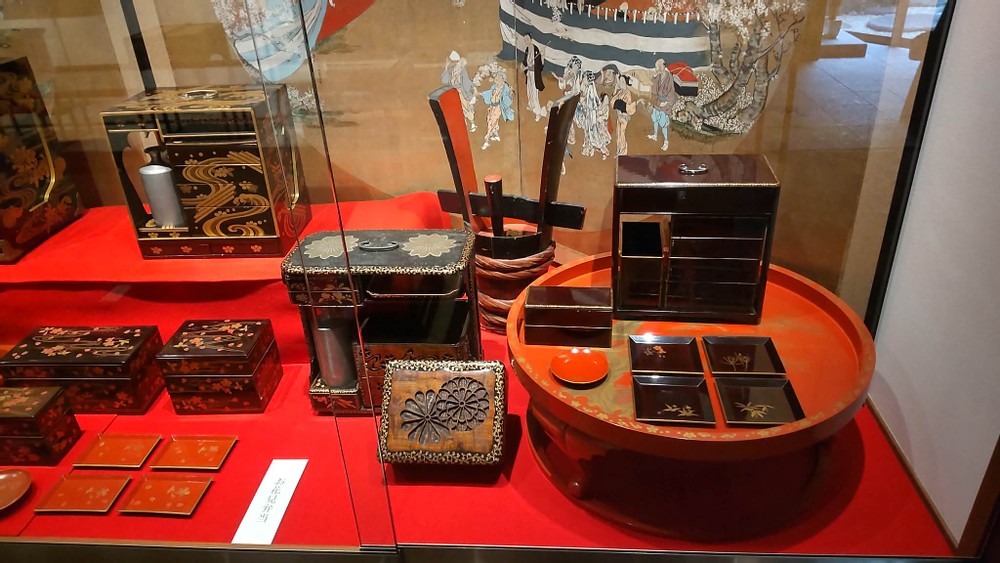
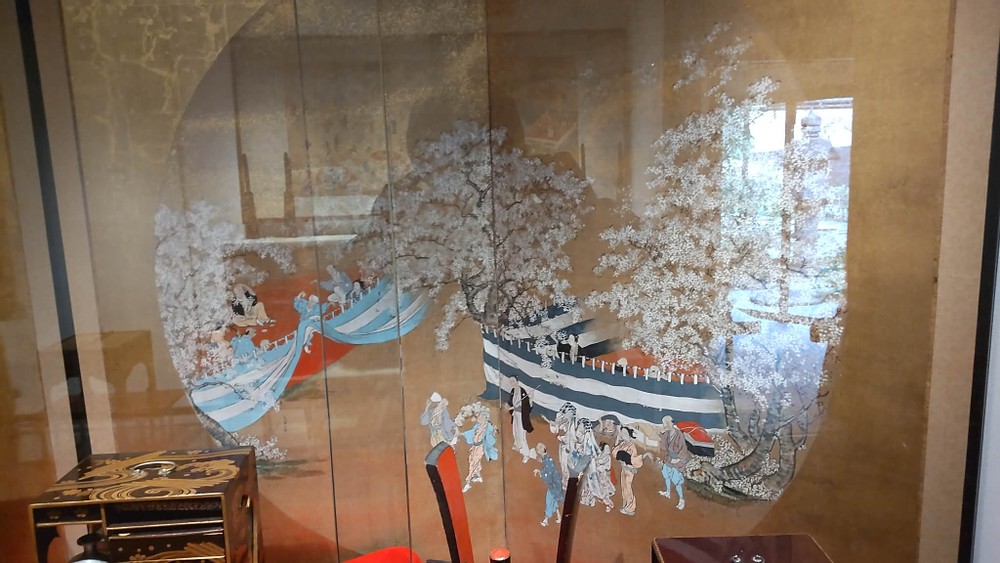
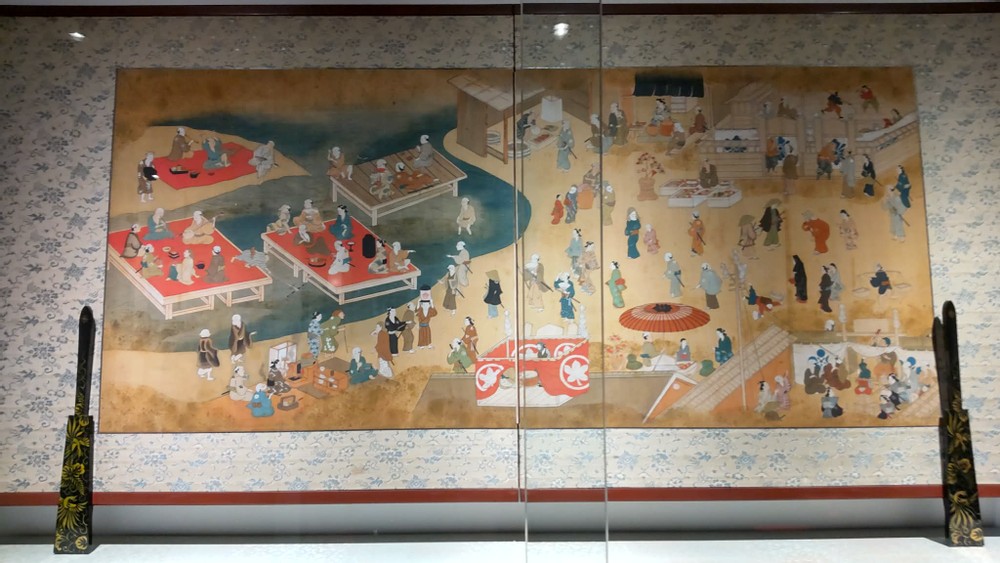
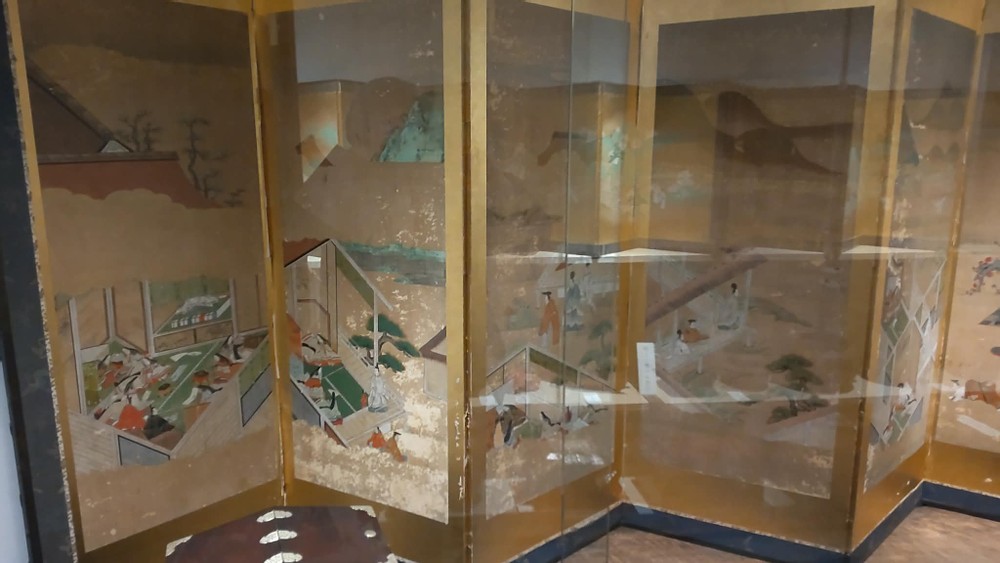
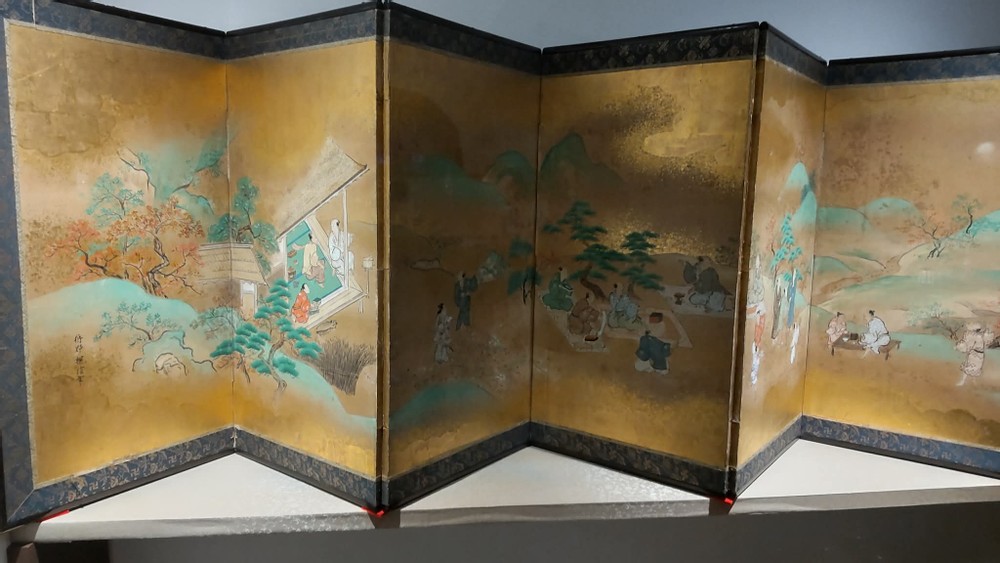
The museum also has collected some beautiful screen paintings.
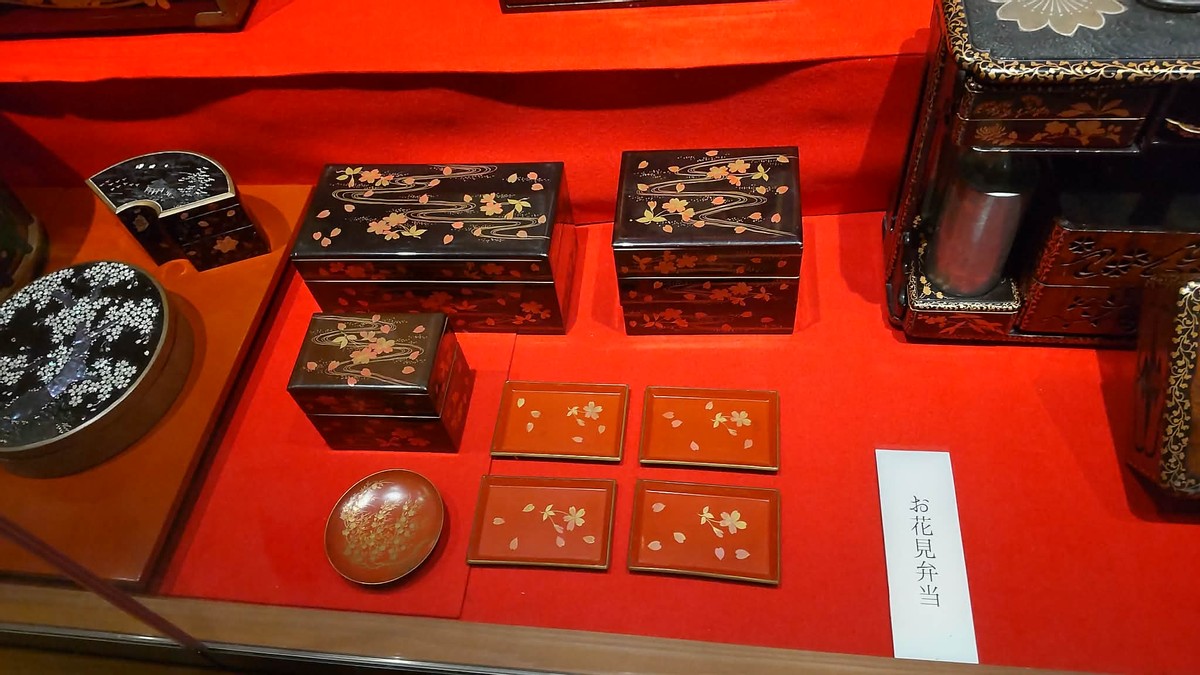
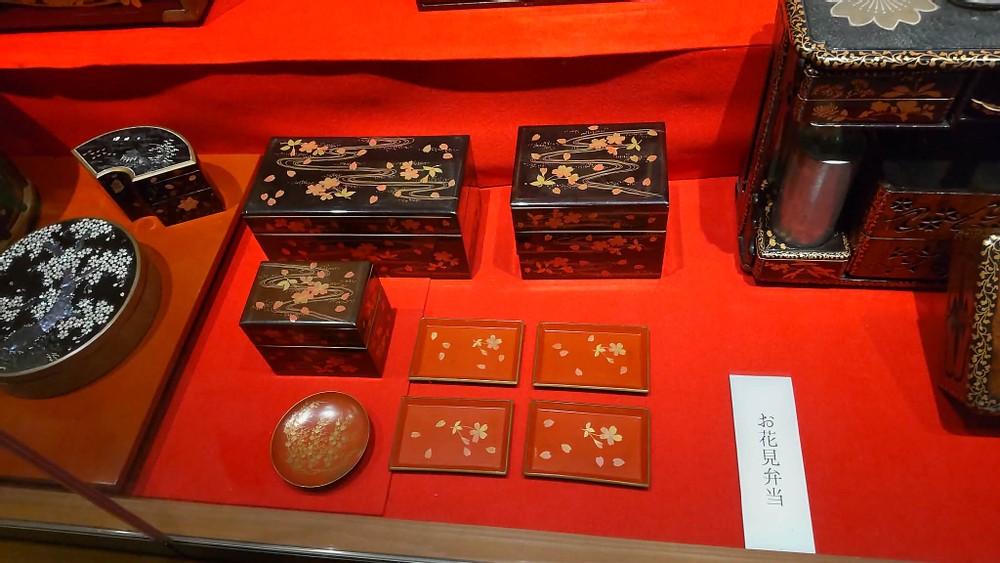
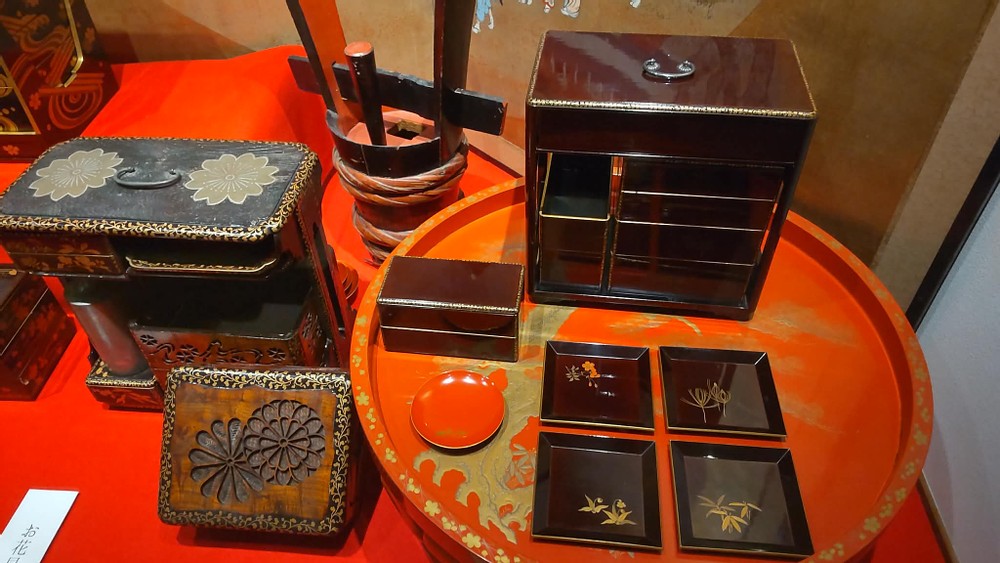
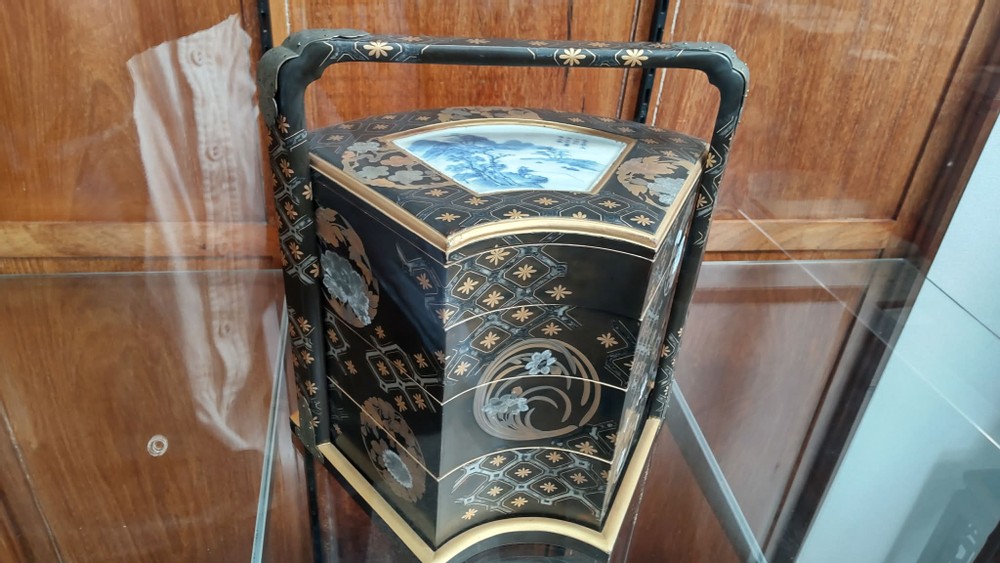
The picture below shows maki-e bento boxes made especially for cherry-blossom viewing.
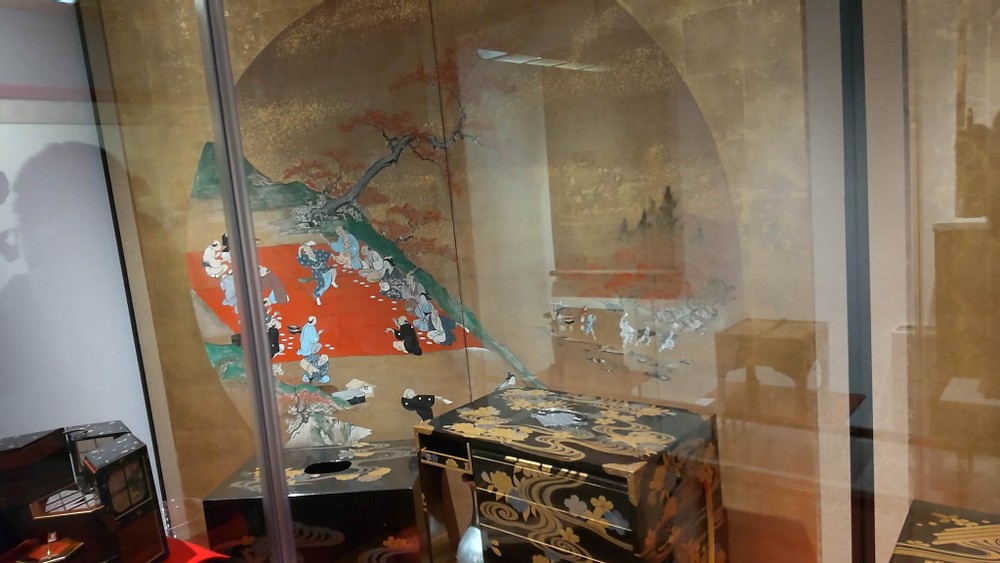
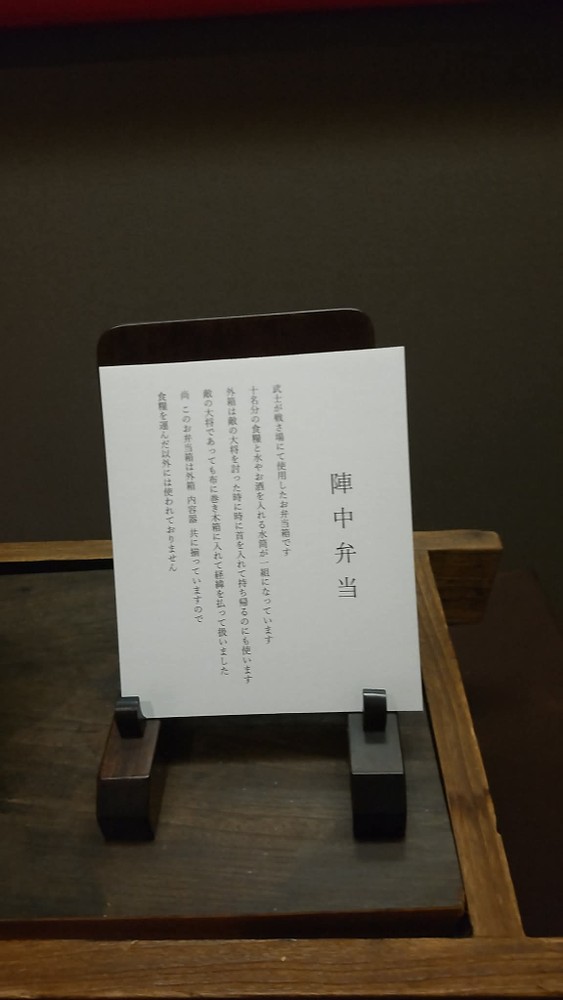
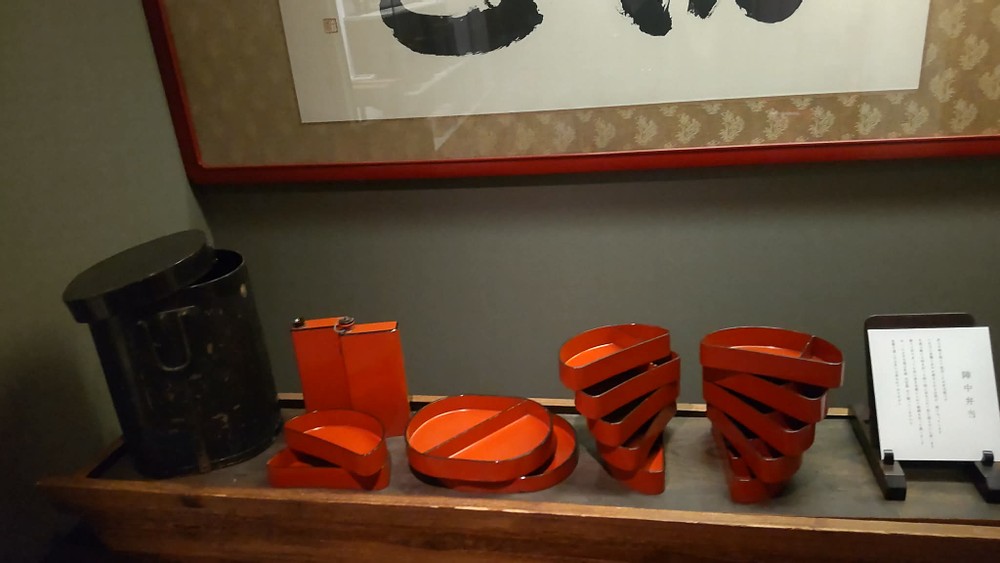
The picture below shows bento boxes for samurai warriors. The black container carried food, water, and sake for ten people. It was also used for carrying opponents' heads. When warriors won battles, they would behead the enemy heads to show the evidence to their lords. However, the decorated black box we saw wasn't used for that purpose.
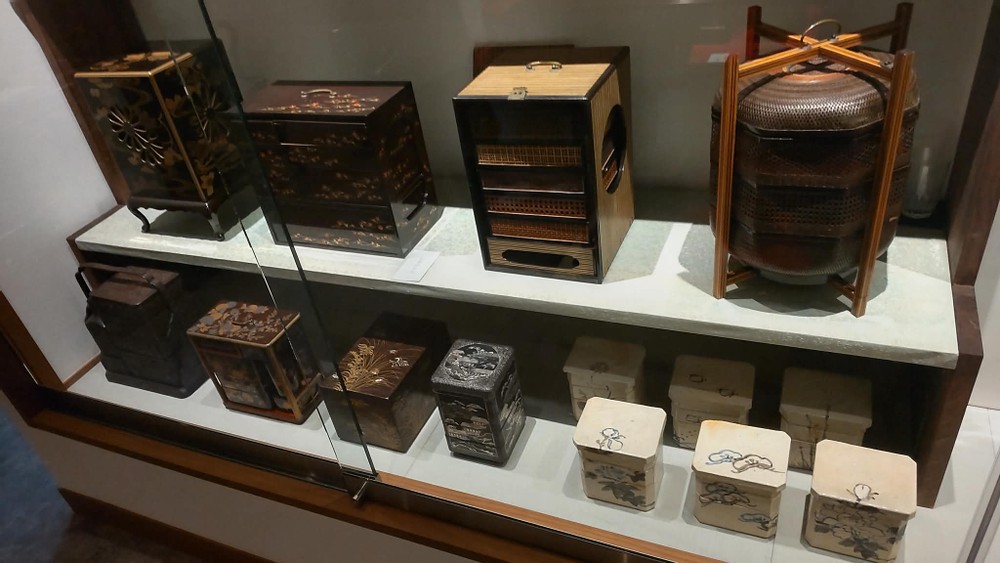
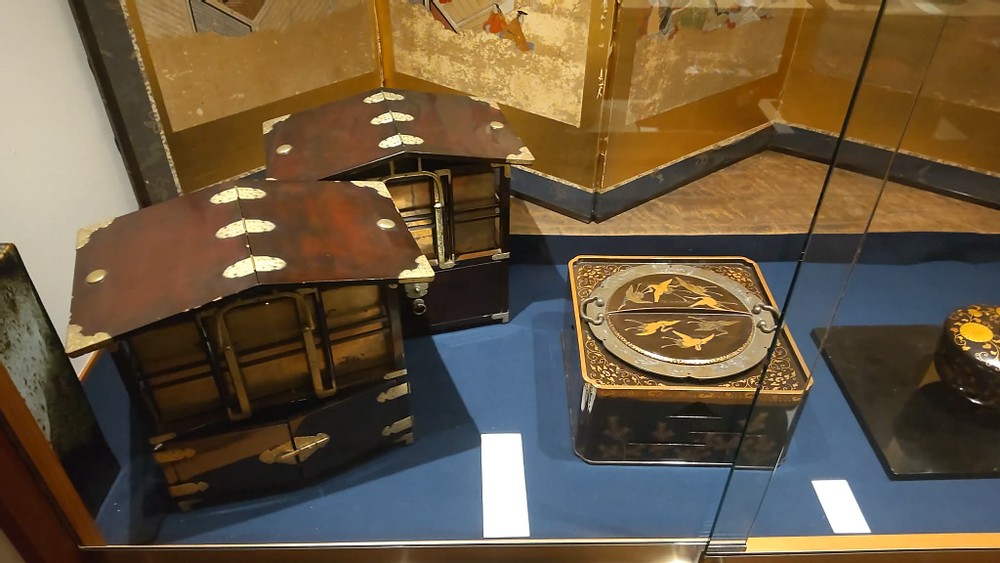
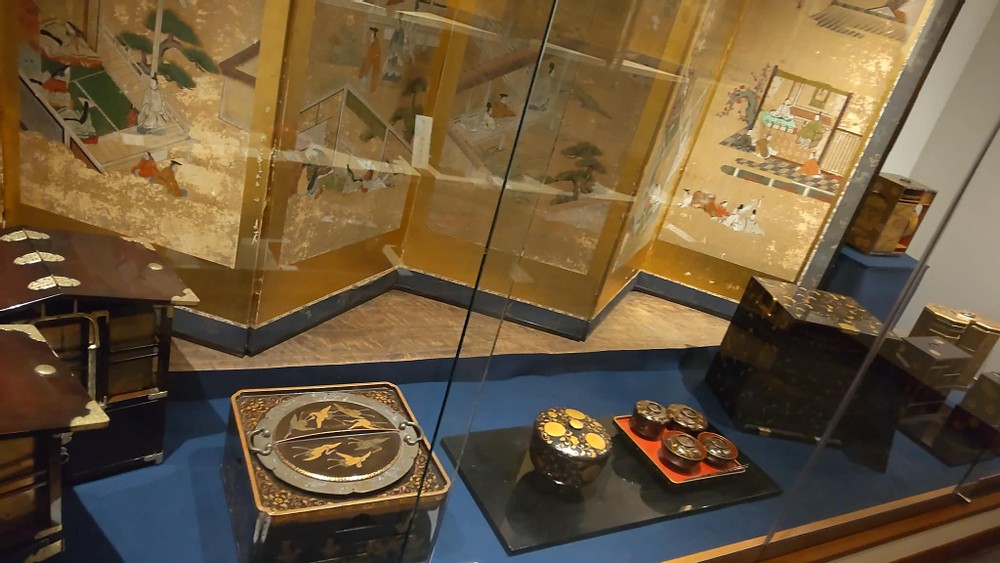
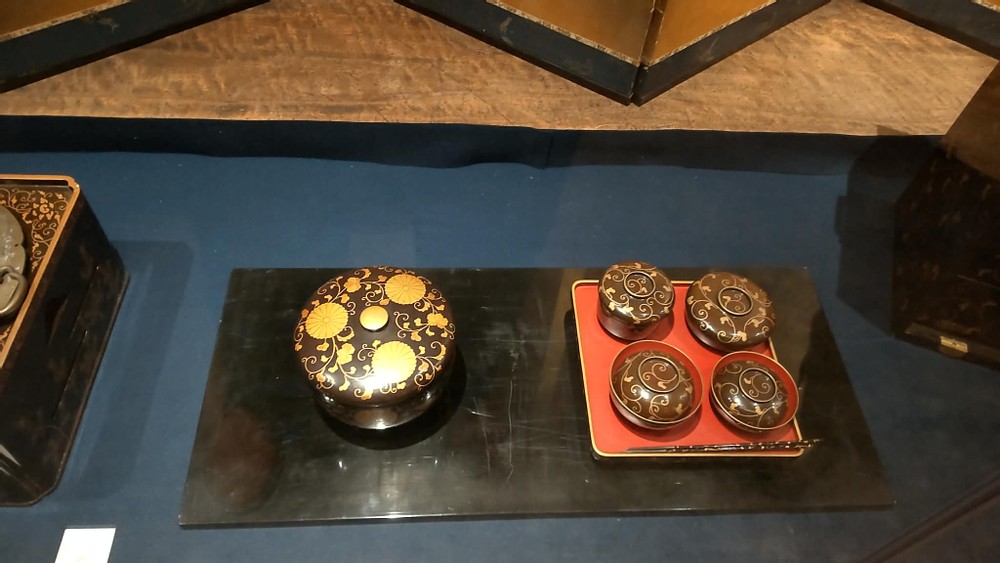
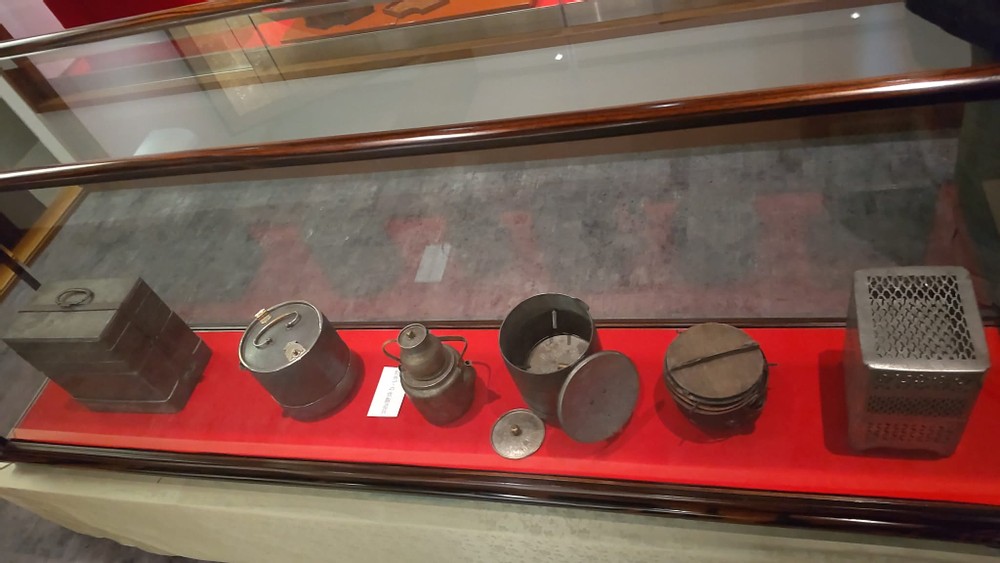
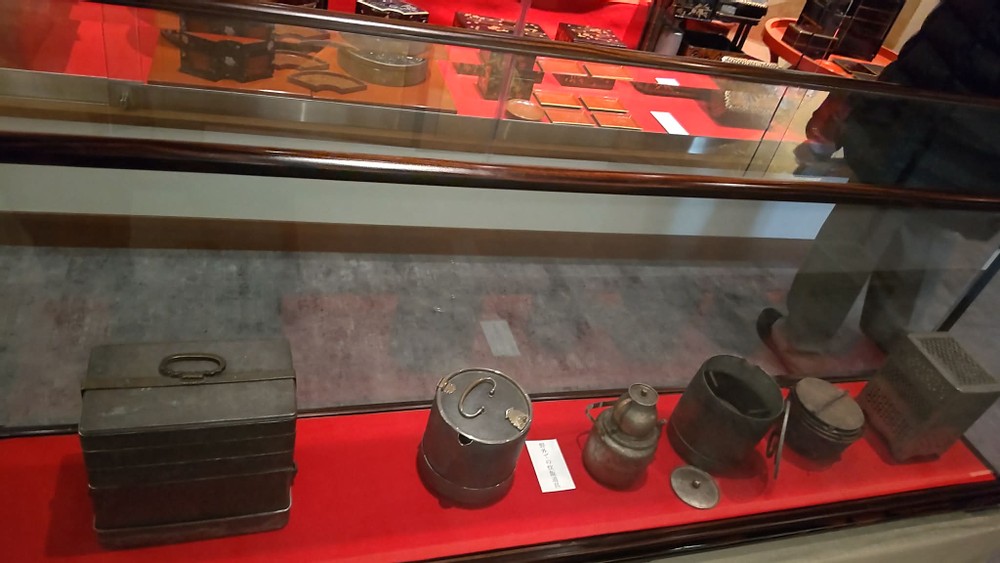
The very left in the second row in the picture below shows a sake bottle and a sake pot. The items next to them are all bento boxes. In the first row, you can see some portable silverware.
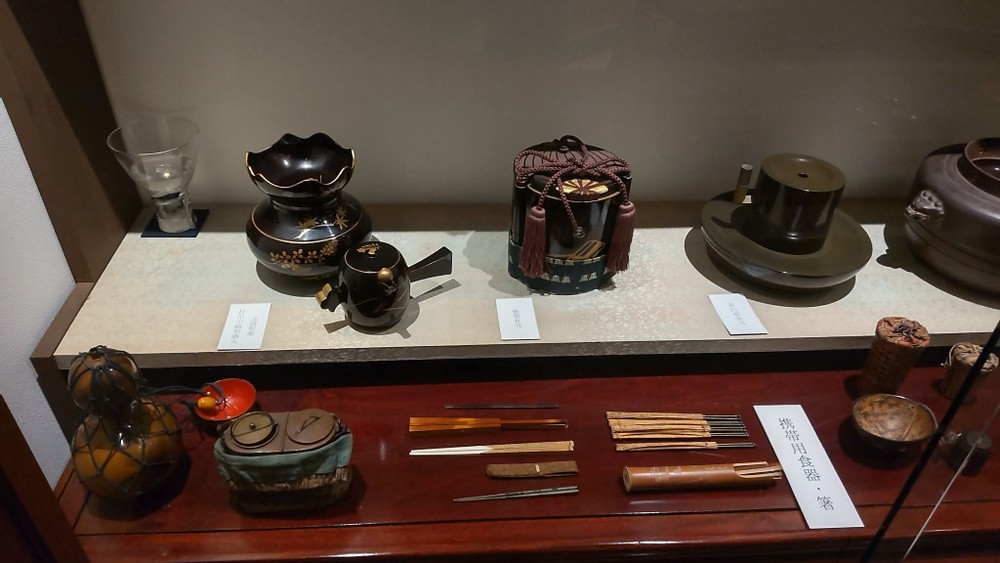
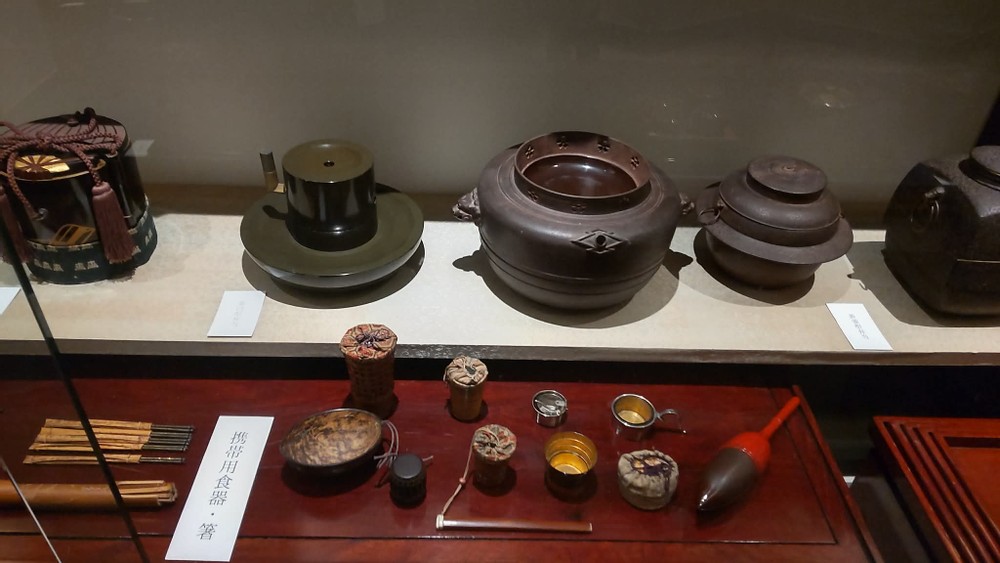
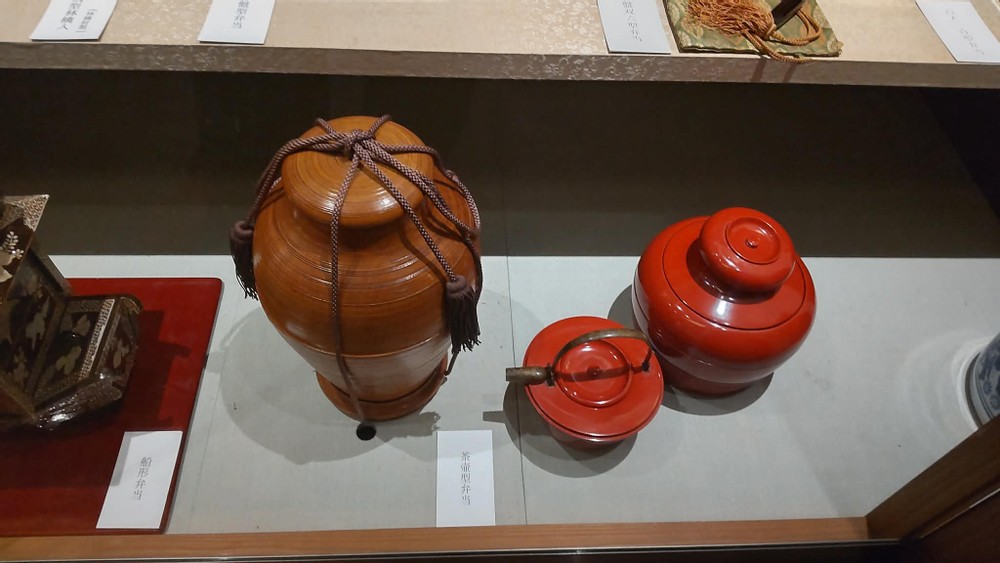
The box in the center decorated with seashells (raden) also a bento box. What's a beautiful one! The jar next to it is also a bento box.
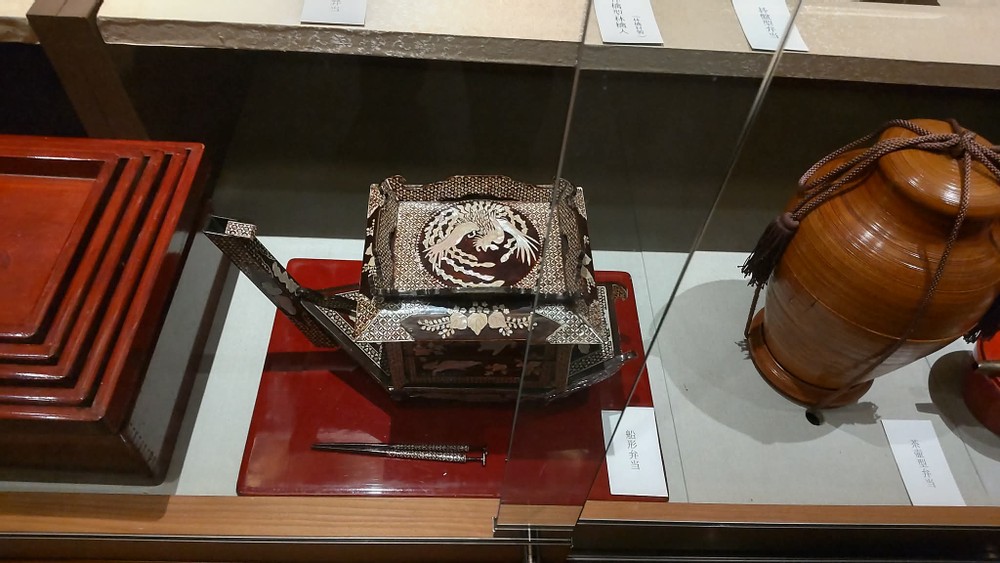
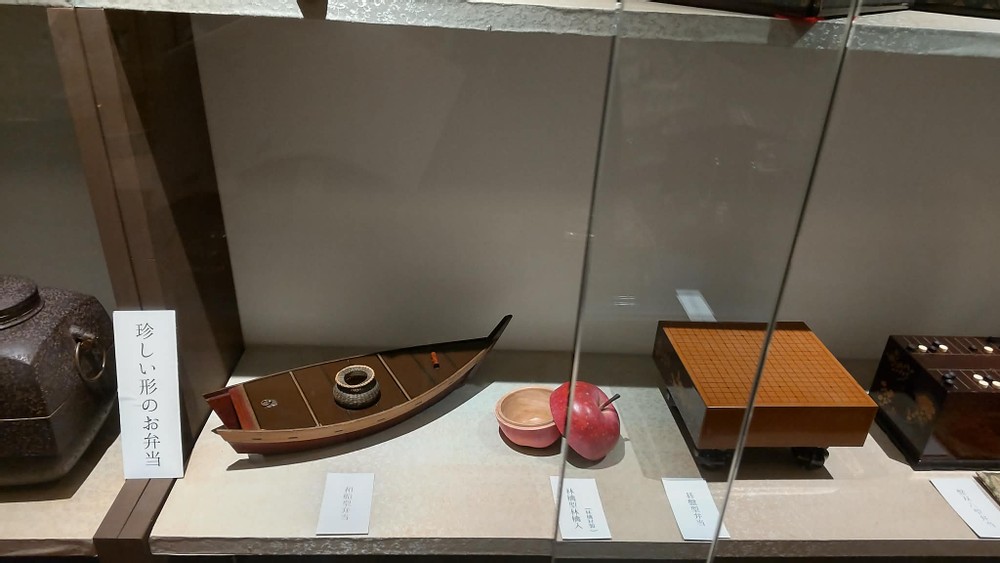
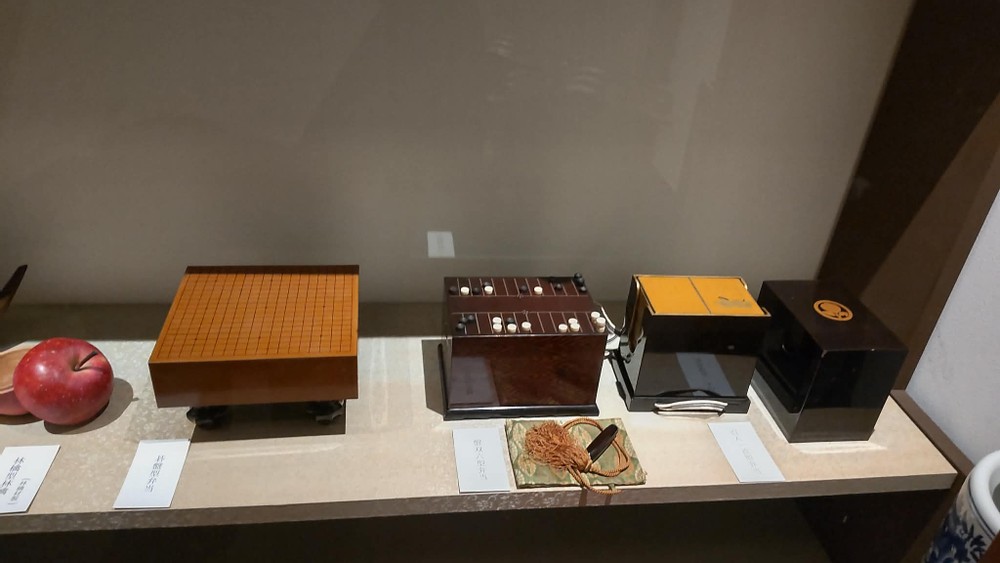
There were also creatively designed ones, such as a ship-shaped bento box, an apple-shaped bento box, a bento box that you could play board-game on the rid, and more.
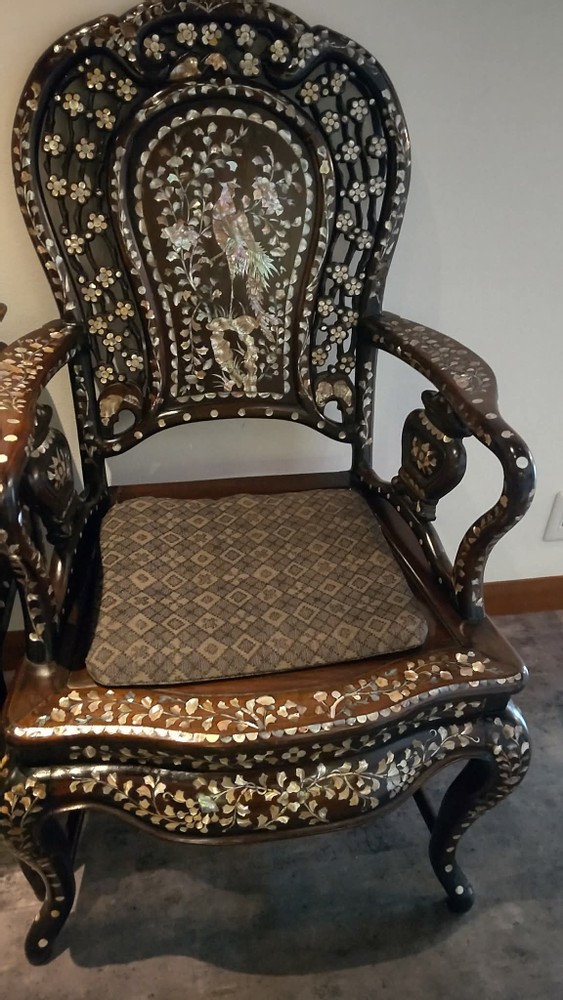
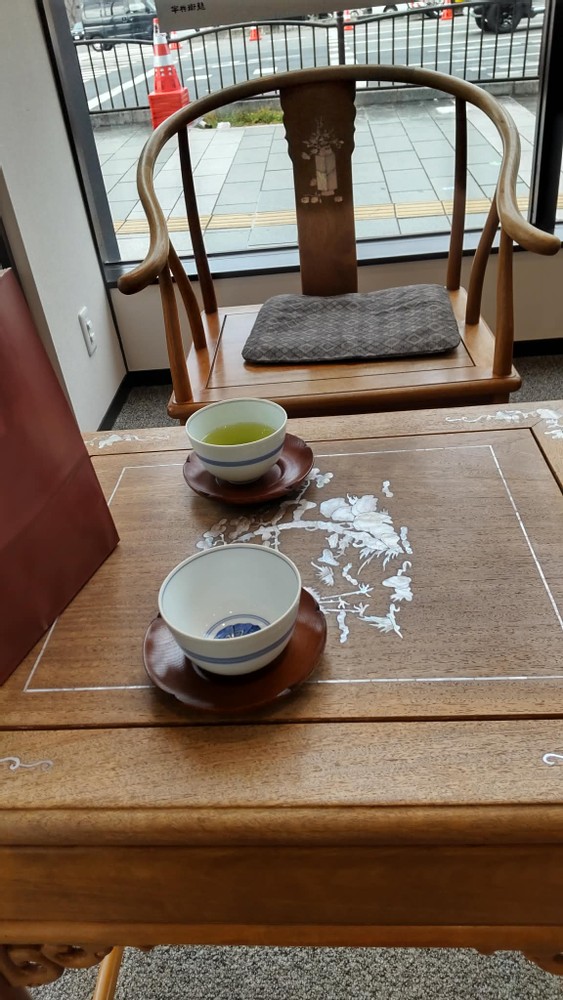
I only took a photo of one raden chair, but actually there were over twenty of them. Both maki-e and raden decorations make objects look very luxurious.
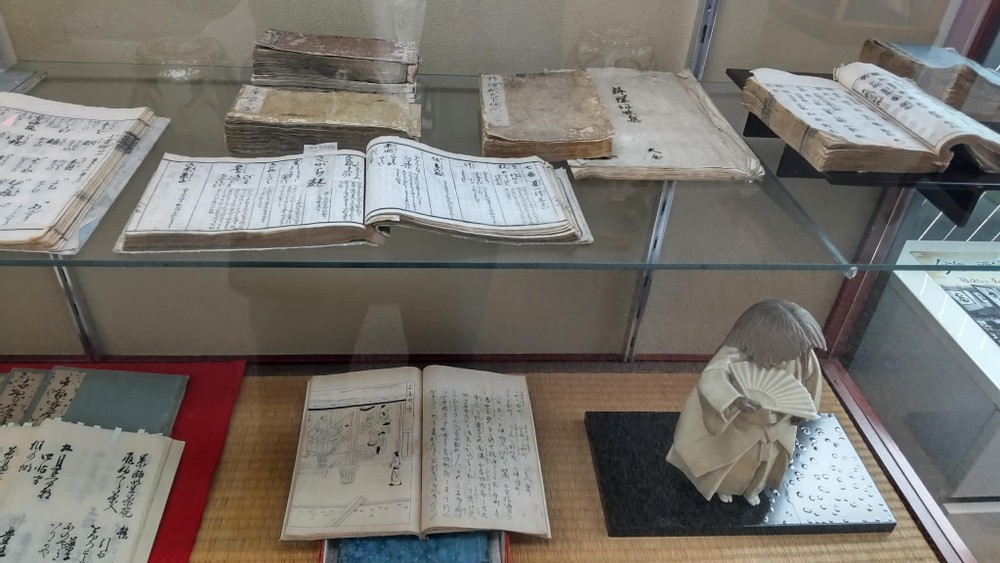
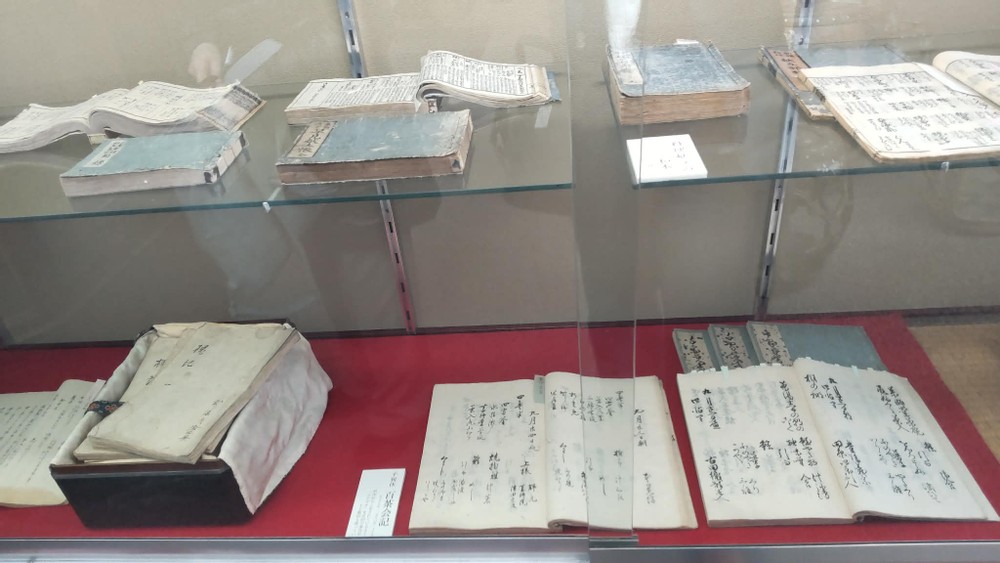
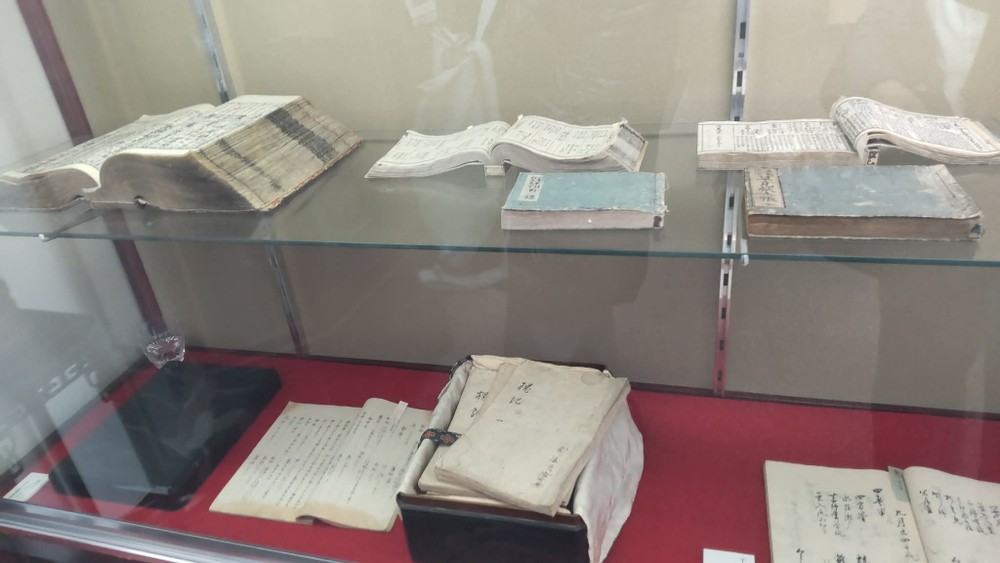
Even old account books were decorated.
After looking around the museum, we drank a cup of Japanese tea. Then we headed Koudai-ji.
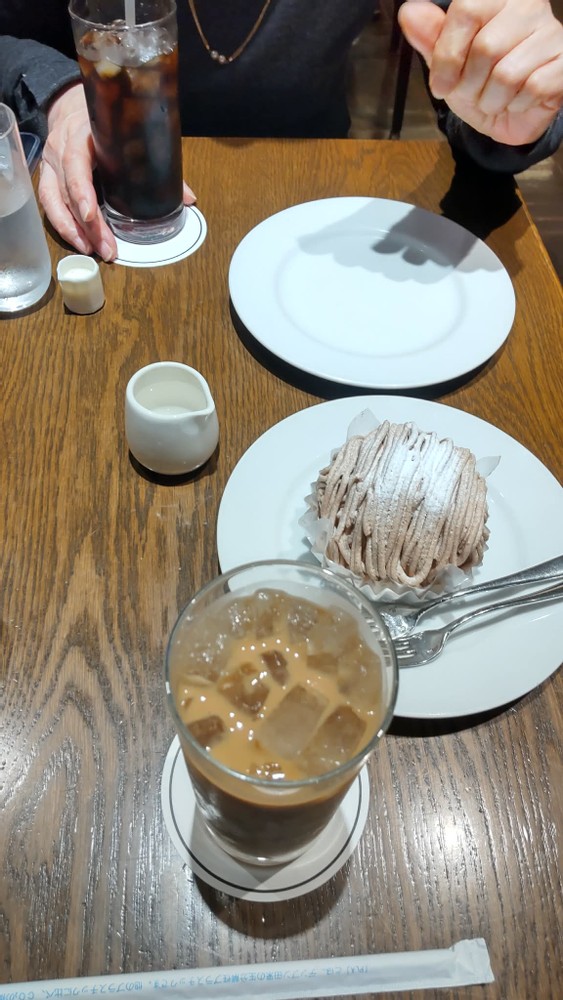
After visiting two temples, we stopped at a coffee shop and ordered iced coffee and a piece of cake to share.
(5146)
What a lovely exhibition!
Thank you, David. We should go there when you come to Japan!