Introduction
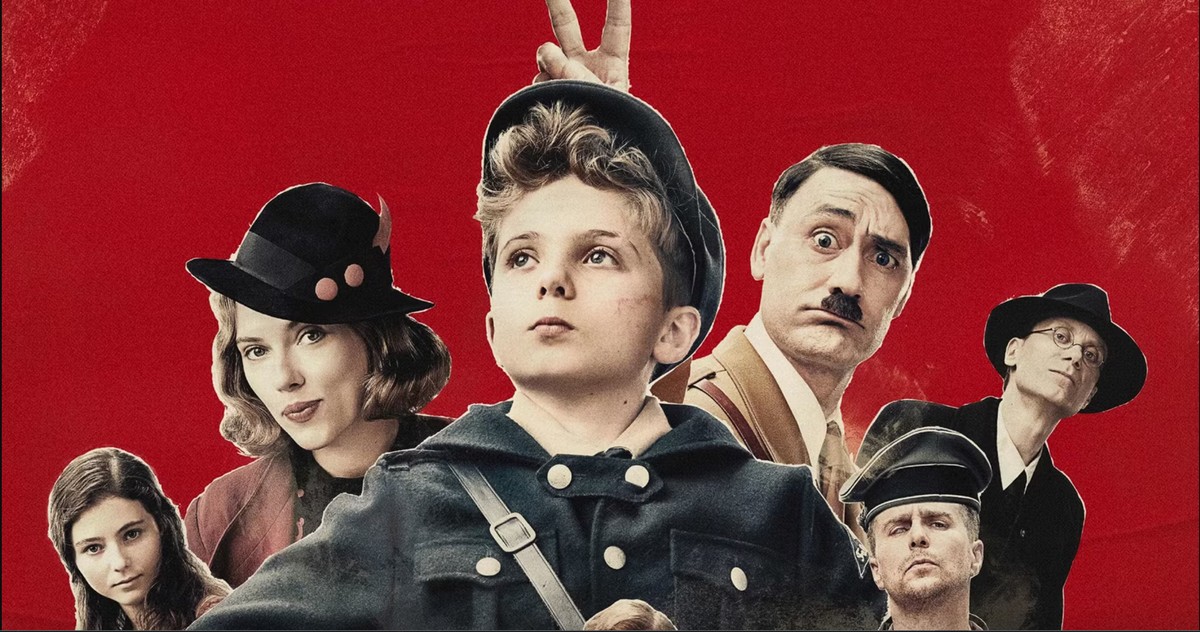
It's really amazing how the modern-day internet makes available all sorts of colorful resources that you would never have dreamed of finding on your own. Just last weekend, I was idly surfing the web when I came across this fantastical film about WWII Nazi Germany called "JoJo Rabbit"--actually, ChatGPT introduced me to the film.
"JoJo Rabbit" is an Oscar-winning 2019 film about how self-proclaimed young Nazi-fanatic JoJo Betzler struggles to reconcile with his anti-Nazi mother and the Jewish girl seeking refuge in their house. While I would be hard-pressed to say that "JoJo Rabbit" offered me a profound insight into the reality of life in WWII Germany, it is the touching plot that really draws me to the film and almost moved me to tears several times. In this critique, I will share a few of my interpretations and insights on the film.
Loss & Endurance
One of the most profound pieces in "JoJo Rabbit," the theme of loss and endurance is woven into the entirety of the film. The storyline in "JoJo Rabbit" is set around a lone mother and son in the midst of a Germany mobilizing for the ongoing devastating conflict that made the entire world its battleground, i.e., WWII. The latter of the two, JoJo Betzler was drawn head over heels to Hitler's rising Third Reich, as was the case with millions of young boys across Germany. However, unbeknownst to him, his mother, Rosie Betzler, was heavily involved in the German underground resistance and even hid a Jewish girl, Elsa Korr, in their house. Although JoJo soon discovered Elsa's part of Rosie's secret, he never revealed it to Rosie or the Gestapo under the assumption that her exposure would endanger them all. Together, these troublesome elements set the stage for the tremendous tragedy that would soon befall the seemingly ordinary and peaceful family.
One day, a few weeks after JoJo discovered Elsa's hiding place, the Gestapo came knocking in a tipped-off search of the house. Days later, JoJo found Rosie's corpse publicly hanged with the tag "Traitor to Germany." This was a huge blow to Elsa and especially JoJo, who had always relied on Rosie for both physical and emotional support. Rosie had always been there for JoJo, from helping him reconcile with the absence of his father to restoring his self-esteem after his partial disability after an accident with a grenade. And now, she had made her final act of guidance in protecting JoJo and Elsa right up to her eventual death at the hands of the Gestapo. The loss of Rosie to JoJo and Elsa was like taking the central support beam away from a tattered old house that, as a result, had become constantly in danger of tipping over the edge into chaos and destruction. Needless to say, taking Rosie out of the picture was devastating to JoJo and Elsa.
Nevertheless, in the wake of all the grief, panic, and blindness that was soon to follow Rosie's death, JoJo and Elsa struck off a precious friendship, united under the mutual loss of their protector and guardian. Amid all the instability and uncertainty that accompanied Rosie's tragedy, JoJo and Elsa were able to put aside all the conflict that had accumulated between them for the past weeks and not only to reconcile but also to become each other's "crutch," leaning on one another to cope with the terrible reality that had befallen them. In this sense, Rosie's death was a good thing in bonding JoJo and Elsa together, and through this, "JoJo Rabbit" made me come to appreciate life's amazing resilience. Indeed, even, and especially amidst dark times, friendship can still bloom, reminding me again of the beauty of life. The story of JoJo and Elsa is solid evidence that there is a bright side to even the darkest of times, however sullen it may seem.
As "JoJo Rabbit" concludes with the war's end, all of JoJo and Elsa's support--Rosie and Captain Klenzendorf (aka CPT K), who had helped conceal Elsa during the Gestapo's search--has departed to another world, with their lives ruthlessly snatched away by the war. Yet miraculously, the young generation--JoJo, Elsa, and JoJo's best friend Yorki--survives. In a time of turmoil, the strong and capable bore the brunt of the onslaught to protect the weaker ones, and their sacrifice was not at all in vain as the youthful and promising next generation lived through to see a brighter world. Although "JoJo Rabbit" is only a rather comical portrayal of the much more devastating reality of WWII, it reflected, to an amazing extent, the period of post-war reconciliation. Even though the war may have claimed the lives of some 50 million people, the survivors made it count in restoring the well-being of those countries ravaged by war and establishing the U.N., NATO, and other international organizations to ensure peace under a unified effort. The rejuvenation of humanity has only just begun.
JoJo Rabbit
More commonly known by his nickname, JoJo Rabbit, JoJo Betzler was a downright incredible main character in "JoJo Rabbit" and one of my all-time favorites. The amount of growth he has seen over the course of the film is absolutely astonishing, and his strength in coping with all of the different conflicts going on both inwardly and outwardly is simply incredible.
From discovering the presence of an 'evil' Jewish hideaway in the house to receiving news of Rosie's death and finding out his mother's role in the resistance movement, JoJo was perhaps the most traumatized character in the film. Any lesser human being would have given way under the enormous pressure from all these overwhelming shocks to what should have been his happy childhood. Indeed, it's almost a miracle to me that JoJo didn't break under the news of his mother's death and blamed Elsa for the terrible reality his life has become--that's what I would have done. I myself have long wondered how would I have faired in JoJo's shows, and for me, it has always been the same answer--a complete give-in to the utter hopelessness of my situation and, ultimately, insanity. For JoJo, it must have taken superhuman strength to not only survive the war but survive with his sanity intact. JoJo's merry dancing and celebration at the very end of "JoJo Rabbit" seemed nearly impossible to me considering all the things he has been through. And yet, he made it through against all odds, and this, I believe, is why I have grown so attached to that little ten-year-old over the course of a little over one hour and three quarters.
Besides all the losses and trauma JoJo experienced, another growth that impressed me was his struggles with the malicious Nazi influence over him. At the start of the film, JoJo was a Nazi fanatic down to every little speck in his impeccable Hitler Youth Uniform--he even had the Führer himself as his imaginary friend--but at the resolution, we see him facing up to his imaginary Hitler's accusations of treachery and kicking him out of the window. More than anything, the whole course of the film was a journey of self-discovery for JoJo. Throughout the plot, JoJo has been struggling inwardly with his own conscience in the form of the scoldings of his imaginary friend Hitler over how he should not have befriended Elsa and such. Among all those times, JoJo had meekly agreed with "Hitler's" demands, and yet, in the endings of the film, he was able to find the courage to stand up to his imaginary terrorizer. So, how did this remarkable transformation happen to start with? That was the question I asked myself over and over again. Perhaps it was his friendship with Elsa that made him see the truth behind Hitler's propaganda; perhaps it was his mother's death that made him see the sense behind all the blind patriotism. Whatever the reason may be, JoJo was able to, in the end, overcome the magic spell cast upon him by Hitler, which was more than 99% of other Germans could say for themselves. This incredible feat, numbered only by his recovery from his mother's death, again demonstrated to me JoJo's courage and inner strength, justifying to me how he was able to survive the horrendous impact of WWII.
Conclusion
While the film "JoJo Rabbit" certainly couldn't be given any credit for an accurate and comprehensive view of WWII Germany, it should very much be celebrated for providing a touching insight into the life of a ten-year-old boy--how he was able to find virtue and righteousness amidst misleading Nazi propaganda, reconcile with his mother, and--perhaps most importantly of all--discover his true self. Some may argue that "JoJo Rabbit" failed tremendously as a history film in not being able to enlighten modern people to the brutal details of living under Nazi Germany. I would righteously disagree that the film succeeded hugely in offering something much more unique--offering people an emotional, thought-provoking glimpse into one of the darkest times in history. Modern films solemnly tell us about the brutality of WWII and lecture us on why society should never make such a horrendous and costly mistake again, but is it not more important to, for once, add some real-life emotion and touchingness into it? Well, whatever you take on my opinion, I still strongly advise you to check "JoJo Rabbit" for yourself and see precisely how WWII can be so breathtakingly portrayed through the eyes of an innocent ten-year-old child.

I didn't see this one, but I liked very much What We Do in the Shadows, a false documentary, his previous one, I think https://www.imdb.com/title/tt3416742
Thanks. That seems to be a rly great one, love the comical delivery of the trailer :)
Also, "Next Goal Wins" (https://www.imdb.com/title/tt10767052/) also seems to be a really great one by him.
title: A unique film
Since the "u" in "unique" is pronounced with a "y" sound, it acts like a consonant here. So we use "a", not "an"