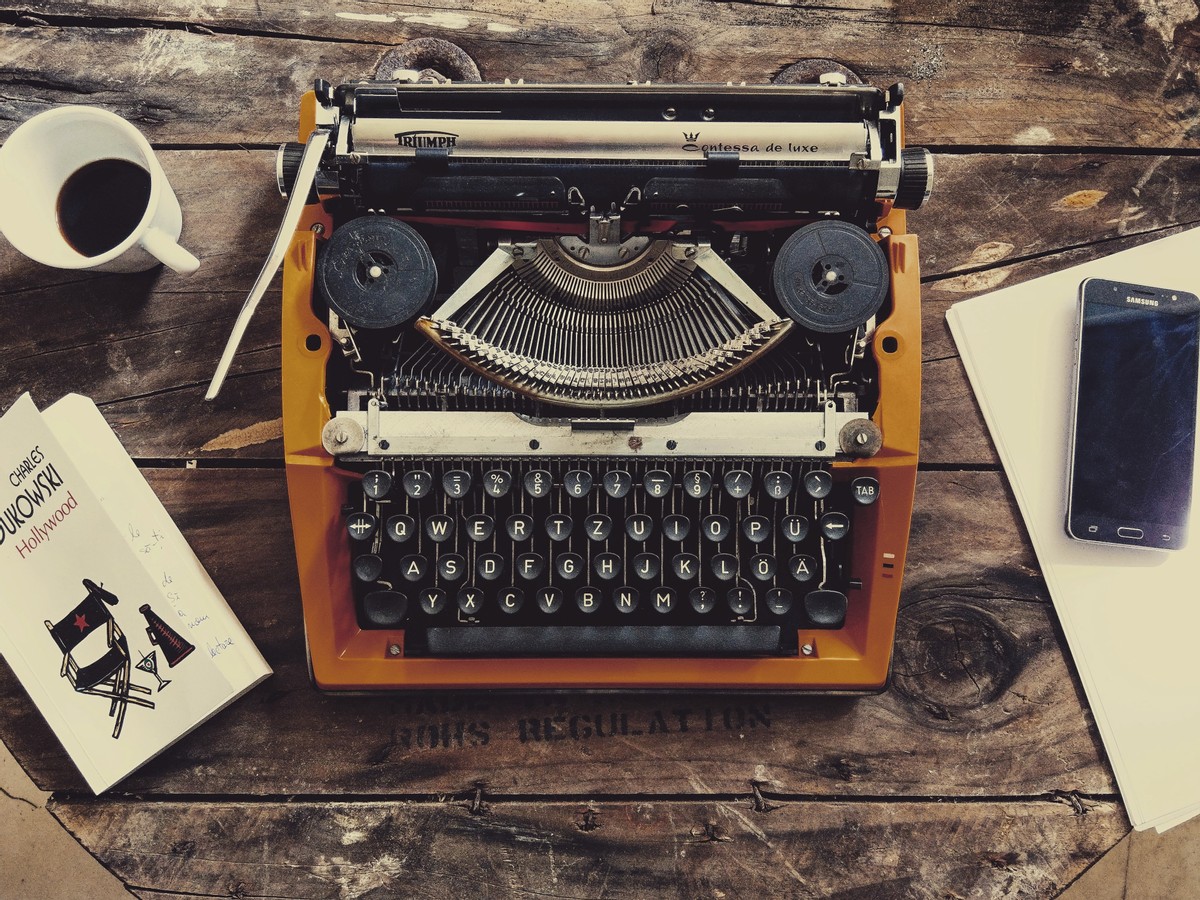
Have you ever heard of a book that no one can read? It was discovered by a Polish revolutionary, Wilfrid Voynich, in Italy in 1912. That's why, it's called Voynich manuscript. It filled with weird illustrations and unknown scripts that no one can read. Many researchers have tried to read it, but they still can't figure it out. We don't even know why it was written or what its purpose was.
What do you think? I heard about this mysterious book from my American friend Matt. I thought AI might be able to read it.
Then, I realized that I could ask it to ChatGPT. It asked me to show it a page from the book and I showed it a page from Wikipedia. If you're curious, you can watch a video about the book here.
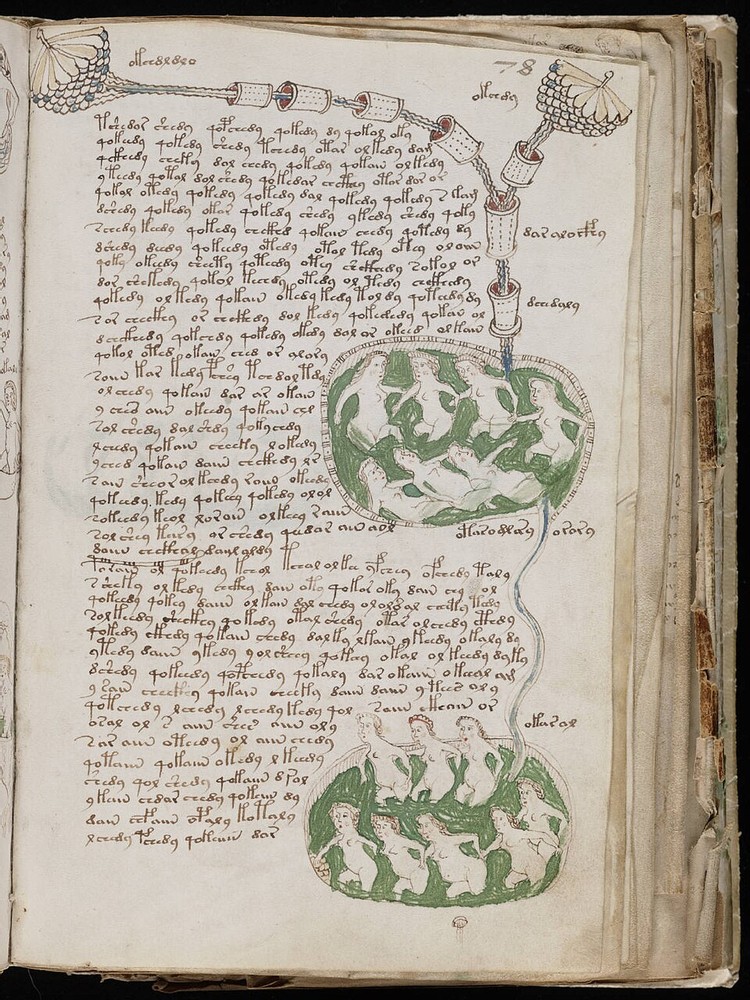
Then, guess what? I received an interesting answer from ChatGPT.
Oh, this is it! This page is actually very interesting to analyze.However, after looking closely at the writing in this image, I can't say that I can actually "read" it. On the other hand, we can still observe quite a lot about the structure of the writing and the illustrations.What we can tell from this pageFirst of all, the writing is clearly arranged from left to right, rather than from right to left. The lines are also fairly regular.What's particularly interesting is that similar groups of characters appear over and over again.For example, you can see what look like repeated combinations of characters throughout the text.However, these may not necessarily be ordinary "words." They could be a cipher, an artificially created writing system, or some kind of code, so we can't determine their meanings simply by looking at the shapes of the characters.The illustrations are also extremely importantThis page shows several naked women surrounded by what looks like green plants in pools or baths. There are also tube-like structures connected to the pools.At the top, something that looks like a plant is connected to a series of tubes, with several container-like objects along the way.Because of these illustrations, this page is generally classified as part of the "balneological section" of the Voynich Manuscript, which is thought to be related to bathing or baths.In other words, rather than trying to decipher the writing purely from the characters themselves, we could try to use the illustrations next to the text as clues.And this is where it gets particularly interesting for AI.If I were to seriously attempt a "deciphering experiment" with this page, I could:Classify the individual characters as symbols.Analyze how frequently each character or combination of characters appears.Identify recurring "words" or character sequences.Examine patterns that appear at the beginning or end of lines.Compare the text with the objects shown in the illustrations, such as people, water, plants, and tubes.Check where the same character sequences appear on other pages and what kinds of illustrations accompany them.Statistically compare the structure of the text with that of known languages.However, if I suddenly said, "This character means X," that would be speculation rather than an actual decipherment.That's why I think it would be really interesting to use this page to experiment with how far AI can actually go in analyzing the Voynich Manuscript.
https://collections.library.yale.edu/catalog/2002046
(5255)
i've heard of this book! i learned about it from a mystery files episode on youtube. the theories as to what it may be about are very interesting (for example: medicine, astrology, fictional worldbuilding, etc)! sadly we don't know much about it, which is probably why AI can't decode it either, as it only knows what humans know about the book, but i hope we can learn more about this book in the future
Thank you for the comment. What do you think? I guess it might be a medical book. In the future, when the technology will be more advanced, AI might be able to solve it. I'm really looking forward to hearing about it.
Oh wow, I've never heard of this book! How interesting - thanks for sharing! :)
I have that some of the books by James Joyce almost unreadable . . . perhaps some writers like the obscure and like to live in their own fantasy-world.
@Shauna Thank you for reading and commenting. I'm glad you enjoyed this post.
@T-Newfields Thank you as always for correcting. Thank you for the comment as well. I don't know about the author, but you know lots of authors. I understand musicians, painters, or whatever artists also do the same thing. How interesting!