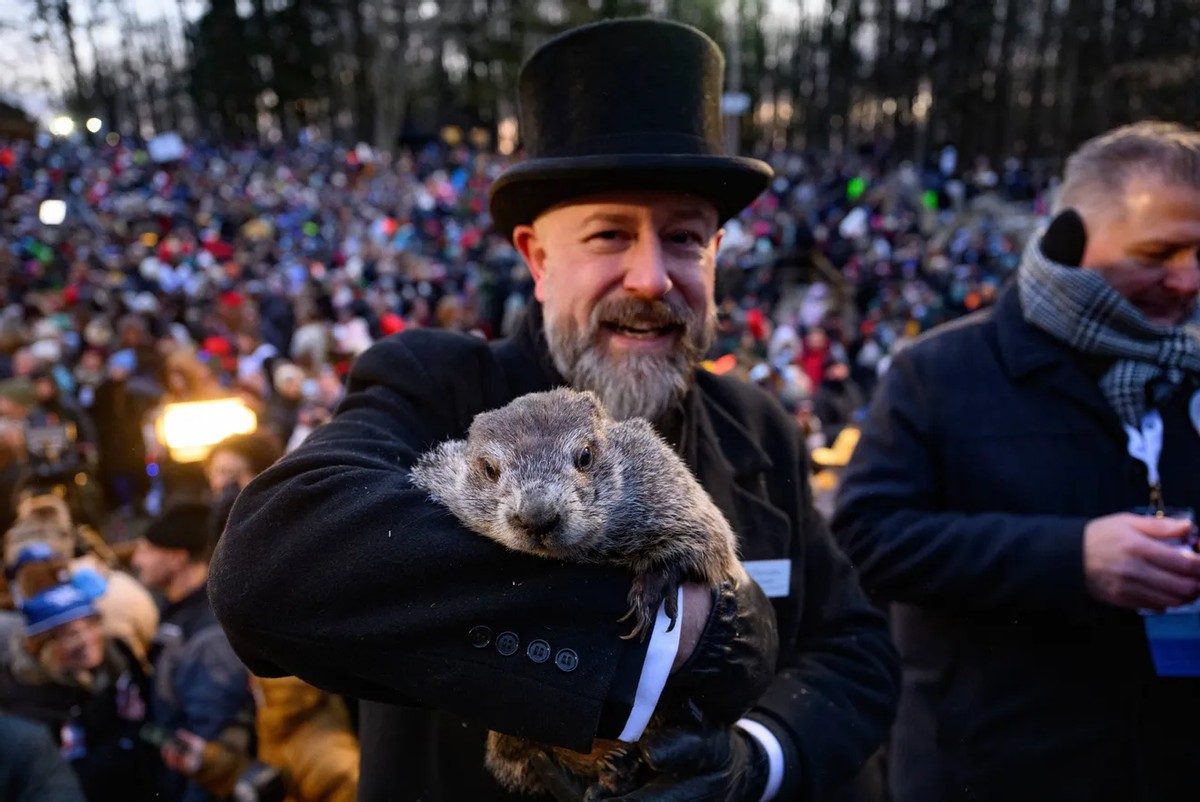
On Monday, February 2nd, it was the Groundhog Day in North America.
Before coming to Canada, I had never heard of this tradition because we celebrate Candlemas Day. On Candlemas Day, people go to the church to light candles and eat crêpes (it's thinner than pancakes) with their family.
The Groundhog Day comes from European immigrants, especially from Germany. In Europe, each region and country had their animal. For example, it's a hedgehog in Ireland. The other popular animals were the wolf, the otter, and the bear.
The first celebration in North America took place in Pennsylvania, USA. They chose the groundhog because it's a very common animal that hibernates in North America. It's also said that they are afraid of their own shadow.
On February 2nd, the groundhog wakes up, comes out of its burrow and there are 2 options: it sees its shadow, or it doesn't.
What does it mean?
If it sees its shadow, it gets scared and goes into its burrow for another 40 days: winter will be longer. If it doesn't see its shadow, spring is coming.
The simplest explanation is: if it's sunny on Groundhog Day, winter will be long.
If it's a cloudy day, winter will be shorter.
This is part of tradition and folklore, but it's not necessarily true. This year, where I live (in eastern Canada), the groundhog didn't see its shadow, so spring should be early.
Today, there are several groundhogs throughout North America. The most popular are Phill in Pennsylvania, Fred in Quebec, Sam in Nova Scotia, and, fun fact, in Nova Scotia, they also have a lobster.
The film Groundhog Day was released in 1993. I haven't seen it yet. We should watch it in class soon.
"Groundhog Day" is a film worth watching again and again :)