Introduction
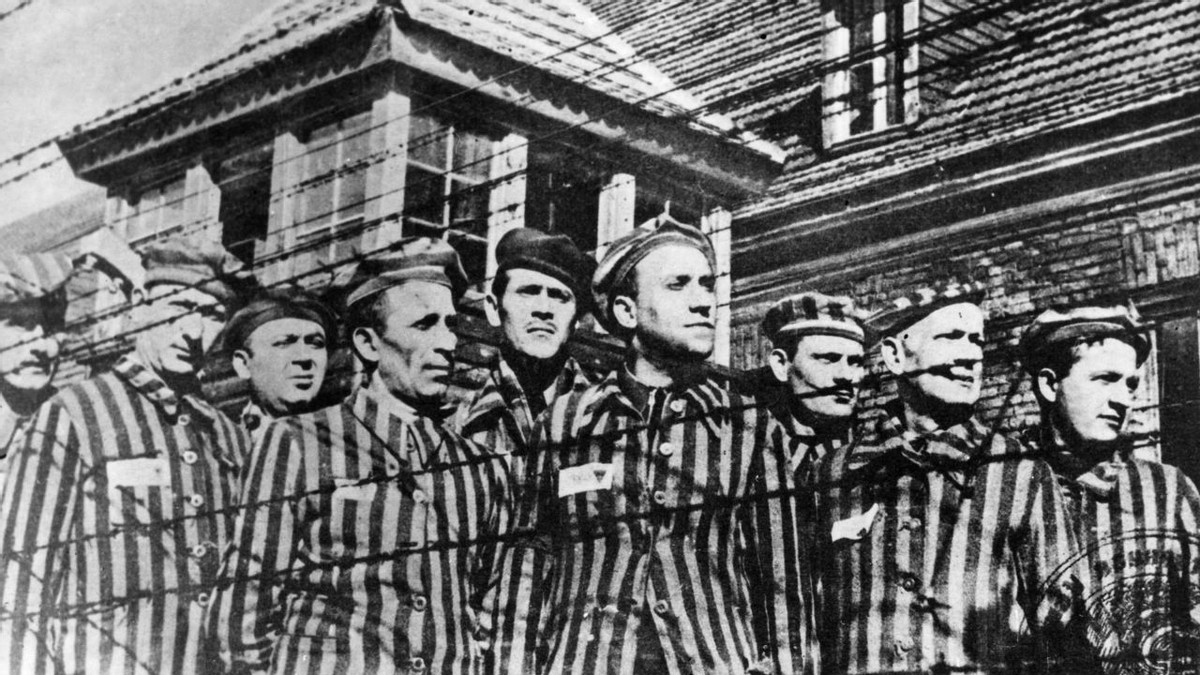
“A great victory” yet still “a great tragedy” (para. 1) is how American five-star general Douglas MacArthur (1945) described the Second World War, one of the bloodiest battles in modern history. A total of 80 million civilians and military personnel lost their lives in this unprecedented world-wide conflict, with 6 million Jewish civilians murdered by the Nazis in their ruthless genocidal campaign known as the Holocaust (History, 2009). Between 1939 and 1945, WWII not only brought about staggering death tolls in the tens of millions all across the globe but also bore witness to horrendous atrocities that exposed humanity at its worst. Nevertheless, even in the face of such darkness, there were still undeniably, glimpses of goodness and hope embodied by courageous individuals such as Oskar Schindler and Irena Sendler who risked everything to also show humanity at its best and brightest (Dawson, 2016). For decades, modern historians have argued about the implications of this devastating war and what this reveals about human nature. Ultimately, amid the countless tragedies and acts of heroism during World War II, mankind has nonetheless proven itself to be fundamentally good in its compassion, bravery, and good faith even as that same nature was tragically distorted to enable unimaginable atrocities.
The Power Religion And Goodfaith
As evidenced during such despairing times as WWII, people often turn to their religion and ideals for hope and spiritual sustenance. The in many cases unshakeable faith of humans allows them to retain their natural goodwill and believe in righteousness even when they are surrounded by darkness. This factor of innate goodness can be best witnessed in Nobel-Peace-Prize-winning author Elia Wiesel’s memoir Night, in which he chronicled his own powerful experience as a Jew during the Holocaust. However, before the brutal reality of WWII swept away his life, Wiesel was an innocent child living in a small town in Transylvania who, more than anything, was extremely devoted to Judaism and its ideals. As Wiesel recounted in his book, in those days before WWII, he would study the Talmud by day and weep over the destruction of the temples in the local synagogues by night (Wiesel, 2006). Together, he and his master Moishe the Beadle would “read, over and over again, the same pages of the Zohar – not to learn it by heart but to discover within the very essence of divinity” (p. 5). Thus, in his childhood, Wiesel was held up by his strong religious faith to lead a virtuous life that brought out the best qualities in him. This devout upbringing unearthed the natural kindness inside him while at the same time cultivating it and strengthening it. Through his kindness and positivity, Wiesel not only was able to survive the terrific concentration camps and go on to become a Nobel Peace Prize-winning author but also showed to the world the power of religion in amplifying the innate goodness in people.
Besides Wiesel’s religious devotion as a source of strength approaching WWII, faith and hope can also come to those directly impacted by WWII as with the case of Anne Frank and her famous diary, The Diary of A Young Girl. As one of the most valuable historic accounts of the Second World War currently in existence, this diary meticulously recorded every moment in Anne’s experience as a Jewish refugee in Nazi-occupied Netherlands all the way from her first days of hiding to her eventual capture in August 1944. In one of her last diary entries on May 3, Anne (1993) wrote that even as the conditions in her hideout, the Secret Annex, grew ever bleaker, “I (she) have often been downcast but never despairing” and that “every day, I (she) feel that I (she) am developing inwardly, that the liberation is drawing near…” (p. 223). Despite the stark surroundings that Anne finds herself in every day, she, as evidenced in her diary, was still able to stay positive even when she should be blaming “the big men” for causing her such misery. Anne’s resilience and good faith stand in stark contrast with all the evil and suffering happening around her, not only displaying her deep-rooted altruism but, more importantly, turning her into a symbol of the goodness and strength that always exists in people.
Courage And Compassion
Apart from the amazing faith of the victims of WWII, humanity also demonstrated its inherent goodness in the admirable efforts of the many people who tried to help. This can be best seen in the six Netherland civilians commonly known as the helpers who took care of Anne Frank and the other seven occupants of the Secret Annex for more than two years, providing food, supplies, and news of the outside world while also doing their best to keep the refugees safe. As Anne (1993) detailed in her January 28, 1944 entry, even though all of the helpers knew that they would share the same fate as Anne would if they were caught, they would still “come upstairs [to the Secret Annex] every day… put on their most cheerful expressions, bring flowers and gifts from the holidays and are always to do all they can” (p. 146). Despite knowing very well the dangers they were putting themselves into, the six helpers still committed their best efforts into protecting Anne Frank and the others against the Nazis. Moreover, while their actions were extraordinary, the helpers did all this purely out of their own free will with no expectation of reward or recognition. Throughout those harrowing years, it was their unwavering compassion and selflessness that sustained their commitment to the Secret Annex. In this remarkable effort, the helpers once again proved that even in the darkest times, the light of the intrinsic goodness in people can still shine through.
However, Anne Frank’s six helpers weren’t the only people who possessed the courage to stand up to the Nazi’s vicious regime. The Danish, for one, did all they could to help the heavily-targeted Jewish population escape the Nazis control throughout the Second World War. As the United States Holocaust Memorial Museum (2016) explains in the article “Courage in Denmark: Resistance to the Nazis in WWII,” the fishermen of Denmark helped some over 7,200 Jews and 680 of their non-Jewish family members to the neighboring safety of Sweden within just two weeks of getting the news about Jewish prosecution in 1943. In risking their lives to help save total strangers with whom they have entirely no obligations to, the Danish people not only saved thousands of innocent lives but also demonstrated their bravery and righteousness. Through their actions, they proved to the world that deep down, humans are still filled with virtue and goodness despite the brutality shown to humanity by Hitler and his Nazis.
The Danger Humanity Still Face
Admittedly, no matter how compelling the evidence of human goodness may be, there are still numerous acts of cruelty and injustice that have occurred throughout human history, particularly during the tumultuous years of WWII. Nevertheless, on close examination, one often finds that those acts were the results of negative influences at work instead of simply the inherent immortality in human nature itself. One striking example of this can be found in Maurice Ogden’s poem “The Hangman,” in which he describes a situation similar to the one that European countries faced during 1938 & 1939 as Hitler’s slow annexation of other countries went unchallenged. In his poem, Ogden (2016) builds a scene where the hangman comes to a small town demanding to take away the townspeople one by one each day. At first, when the townspeople discovered that the hangman is killing people for no good reason, they protest, crying out “murderer” and “shame” (v. 12) to express their indignation and injustice. However, in spite of the initial bravado, the townspeople eventually give in, allowing the hangman to take a second victim from among them without any protest entirely “out of fear of his hangman’s cloak” (v. 13). However, even though the hangman won eventually here, the townspeople initially had the courage and sense of justice to stand up to the hangman to protect one of their own, proving that people are still essentially good at heart, enough to protest against the injustice happening around them. In this case, the only reason that the hangmen were to break the townspeople’s resistance was by manipulating their fear and using that as leverage. This shows that the susceptibility of people to negative influences is the actual reason behind the bad acts they commit or allow to commit, not their bad nature.
This phenomenon in human nature can be most distinctly observed in WWII, where the Nazis were able to corrupt the mindset and nature to great effect with their extensive propaganda campaign. According to The Wiener Holocaust Library (2016), the Nazis’ propaganda was a key factor in promoting their power among the German people in which they “encouraged popular support for Hitler and the regime and its actions by centralizing and controlling all means of public information and entertainment” (p. 2, para. 3), including radio broadcast, newspaper, magazines, posters, literature, music, art, and film. Moreover, the Nazi Propaganda Ministry, spear-headed by Minister Joseph Goebbels, also preyed upon children in particular as they were easy targets of indoctrination. To do this, “the Nazis took [complete] control of their formal education and leisure time” (p. 8, para. 1), regulating textbook information and directing literature production to promote Nazi ideals and values, one major part of which was the cleansing of the inferior Jewish race for the betterment of Aryan society. Over the years, these themes of racist literature have become extremely common in German children’s books at that time, with Ernst Heimer’s 1940 Der Pudelmopsdackerlpinscher und andere besinnliche Erzählungen (The Poodle-Pug- Dachshund-Pinscher and other contemplative stories) comparing Jews to a number of different disagreeable animals ranging from locusts to mongrel dogs and another short story, Der Giftpilz, describing Jews as poisonous mushrooms to show the danger that they pose society. Besides this, there were also numerous works portraying Hitler as the almighty that would deliver the German people from the ruins of WWI. Through this and many more, the Nazis were able to effectively control the minds of their subjects, manipulating their essentially good nature into allowing and even supporting their acts of inhumane atrocities against the Jews. Hence stems all the irrational enthusiasm that the Nazis received from their people – not because of the fundamental evil that exists in humanity but due to the vulnerability and unpreparedness of people against such overwhelming propaganda and negative influence.
Conclusion
Thus, despite the many cases of human darkness seen in WWII, human nature is still essentially goodhearted, as evidenced in the equally numerous acts of kindness, bravery, and compassion appearing in WWII. The Second World War certainly has been an extremely dark time in human history, but humans are rapidly learning and doing the best they can to improve and ensure such a catastrophe from happening again. The introduction of the United Nations as an international peace-keeping force, the creation of Israel as a sanctuary to the persecuted Jewish people, the rise of the countless fundraising campaigns to protect the environment and make good in the world – these are all the goodness in human nature at work. As Elie Wiesel (2025) stated in his 1999 speech to U.S. President Bill Clinton, “And together, we walk towards the new millennium, carried by profound fears and extraordinary hope” (para. 25).
References
- Dawson, M. (2016, October 2). Meet the female Schindler who saved 2,500 kids by posing them as gentiles. New York Post. https://nypost.com/2016/10/02/meet-the-female-schindler-who-saved-2500-kids-by-posing-them-as-gentiles/
- Frank, A. (1993). The Diary of A Young Girl. [B. M. Mooyaart-Doubleday trans.]. Bantam Books. (Original work published 1947). https://archive.org/details/in.ernet.dli.2015.201940/mode/2up
- History. (2009, October 29). World War II. https://www.history.com/articles/world-war-ii-history
- MacArthur, D. (2022). General Douglas MacArthur - Radio Broadcast to the Nation Following the USS Missouri Surrender Ceremony. [Transcript]. Retrieved from www.americanrhetoric.com/speeches/douglasmacarthurradiojapanesesurrenderceremony.htm
- Ogden, M. (2016, August 2). The Hangman. Facing History For Ourselves. https://www.facinghistory.org/resource-library/hangman
- The United States Holocaust Memorial Museum. (2016). Courage in Denmark: Resistance to the Nazis in WWII. Common Lit. https://www.commonlit.org/en/texts/courage-in-denmark-resistance-to-the-nazis-in-wwii
- The Wiener Holocaust Library. (n.d.). Nazi Propaganda – the Holocaust Explained: Designed for Schools. The Holocaust Explained. https://www.theholocaustexplained.org/educational-resource-nazi-propaganda/
- Wiesel, E. (2006). Night. [M. Wiesel trans.]. Hill & Wang. (Original work published 1958). https://archive.org/details/elie-wiesel-night-full-text
- Wiesel, E. (2025). Elie Wiesel - The Perils of Indifference. [Transcript]. Retrieved from https://www.americanrhetoric.com/speeches/ewieselperilsofindifference.html