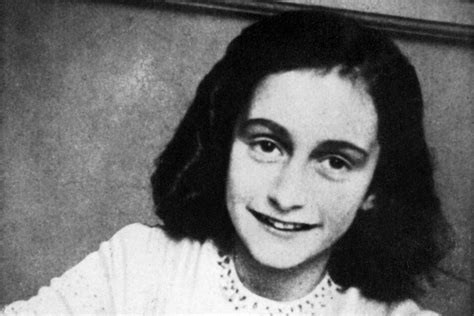
Following the Footsteps of Anne Frank and Her Diary (Sunday, June 14 - Thursday, July 9, 1942)
—
by Matthew Yu
Introduction
Recently, my English teacher introduced The Diary of Anne Frank to study as part of a wider theme concerning the Holocaust and human nature. Composed of two acts, this piece of drama by Frances Goodrich and Albert Hackett was based on Anne Frank: The Diary of a Young Girl, in which she recounts her experience as a Jewish girl hiding from the Nazis during WWII. Immediately upon reading the it, I was enthralled by how different WWII suddenly became when portrayed through the eyes of a teenager. The drama drew me irresistibly into Anne's life: her fears, struggles, joys, and, most important of all, her innocent yet admirable belief in man's kindness despite all the horrors she has seen throughout the Holocaust. I was struck by Anne's incredible liveliness, bravery, resilience, and ability to see the light even when facing one of the darkest times in our world's history. Throughout the play, I saw not only Anne maturing into a courageous young woman but also her unwavering good faith at work.
However, all the while, I was discontented with how insufficiently Anne's experience was portrayed in the drama. I felt constrained by the fleeting glimpses of Anne's life shown in the drama; I yearned for true understanding – to be fully taken into her world and see for myself the remarkable life she had led through such a remarkable time. This journey eventually led me to the Anne Frank's original diary.
Sunday, June 14 -- Thursday, July 9, 1942
Over the decades after WWII, Anne's story has become practically legendary throughout the world, largely thanks to the publication of her famous diary. When most people think of her, what comes to mind is the image of a fourteen-year-old girl hiding out in a small bedroom while explosions and gunfire rage in the distant battlefield. However, when I read through the eighteen-or-so pages that detailed her life before the secret annex, the picture of a different, more innocent Anne appears before me. I see a girl with a normal life filled with school, a big sister, best mates, and boyfriends - not that much different from teenagers nowadays. If I close my eyes, I could just imagine her in the 21st century, going to school every morning, hanging out with friends, living life without a care in the world. To me, seeing her life over the one month before going into hiding made me realize that Anne Frank was also a a living, breathing person — not just a name in history. It made me realize that underneath the tragic icon of endurance against the Nazi's twisted regime of genocide, Anne was actually someone ordinary who had her own life before it all went down - someone just like me.
However, more than anything, the normalcy of this time in Anne's life, however short lived, utterly fascinates me. It was 1942; Nazi Germany had begun their annexation of Europe - they were already occupying Amsterdam where Anne was - and, above all, had made their hostile intentions against the Jews crystal clear through the pogroms and the anti-Jewish decrees. And yet, through all this, the young Anne was able to retain a carefree and happy life, or at least as much as it could be under German occupation, blissfully unaware of the upheaval happening around her - the unique gift of a child, able to look past and shrug off even the darkest times. In this, Anne's innocence resonates with her famous quote: "In spite of everything, I still believe that people are really good at heart." Time and again, Anne has demonstrated her capacity to find goodness and positivity amidst darkness not merely through her words but, even more importantly, through the way she conducts herself.
Conclusion
In her old life, Anne had it all - countless friends and relations, a pair of loving parents, good marks at school. Anne had a bright future. But then, Anne's life, the future that she could have had living in the Netherlands untouched by war, was ripped away by the Nazi's genocidal acts of persecution. Her entire existence was tipped upside-down, swallowed by the terror, misery, and cruelty inflicted by the Nazis. She had to go into hiding, trapped with seven other people for two years, not able to run and play or even feel the warmth of the sun. And yet, compared to the countless other victims of Hitler’s perverted campaign, Anne’s story, though harrowing, was tragically one of the more fortunate ones. The six million Jews murdered in Nazi concentration camps and mass shootings, the three million Soviet prisoners of war 'disposed of' in cold blood - these deaths cannot merely be justified by the harsh demands of war; they are true atrocities against mankind. Anne Frank's diary reminded me that behind each one of those numbers is a complex life with families in mourning, futures destroyed, and hopes extinguished. May the story of Anne Frank and countless other victims of WWII serve as a warning to humanity, may they live on forever in the hearts of man so that future generations will never again have to witness such horrors.

Very good. I notice that you use both the present and past tense throughout. Try sticking with one.
I notice this piece is extremely well-written, using lots of advanced vocabulary. The English is extremely natural and is at an academic level.