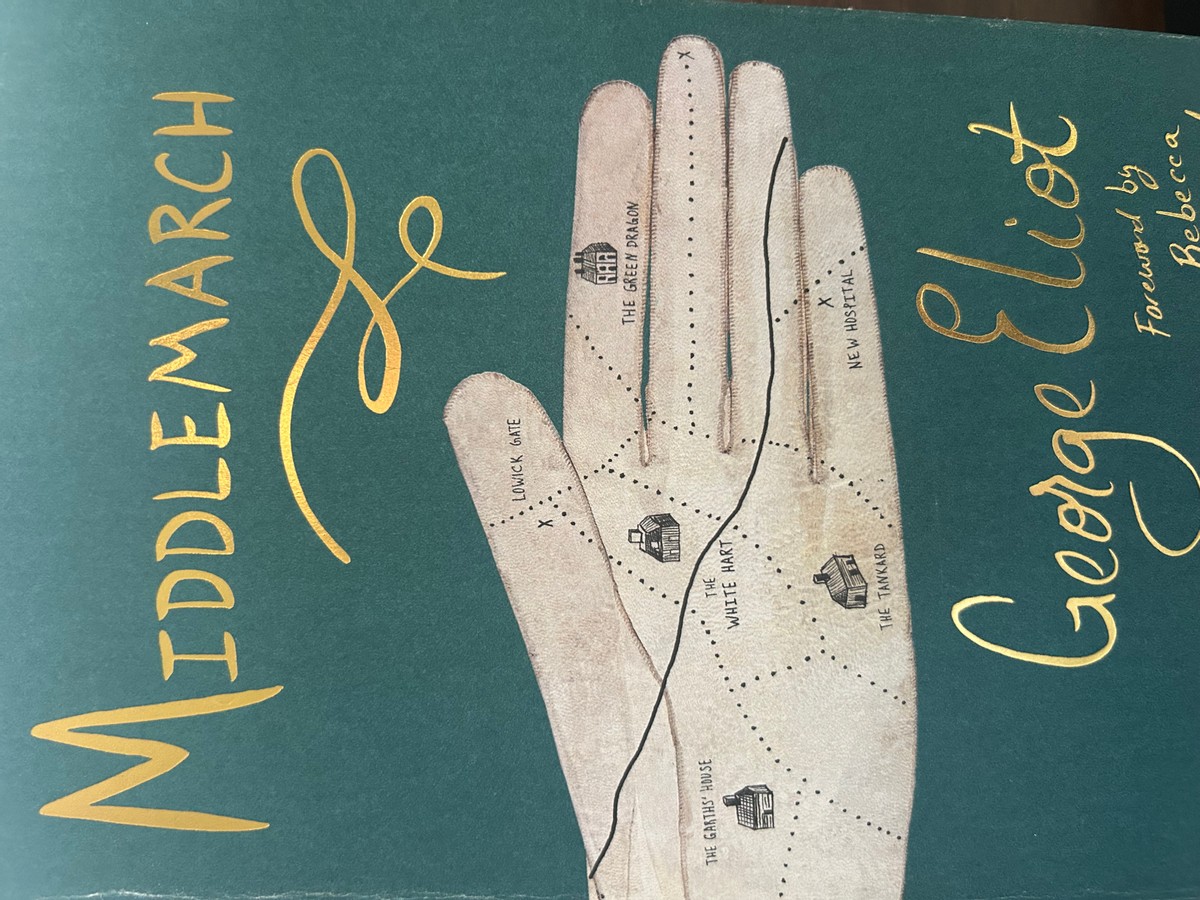
These chapters exhausted me. For a few times, I plucked my hair and asked myself why I should start this book in the first place. All those five-line long sentences!😵
Is it a fashion of the 19th century that the author should jump in and remark on her own characters' philosophy, rules and inner life? I wonder whether the editor had suggested splitting this whole book into two parts: one is focused on the fiction itself and the other consists of the figure's profile, the writer's opinion of the figure's behavior, etc.
I'm not saying I don't appreciate the author's comments. They are serious. Maybe a modern reader doesn't always find such seriousness in most fictional works, regarding that the main job of a fiction is to urge readers to turn pages instead of chucking the book away. Rather than expressing her thoughts via a roundabout way such as satire or plot, she decided to argue and reason. This choice itself is seriousness and frankness, too. Under this influence, in the reading process, I always feel I am forced to face these issues that this book touched more directly and honestly. After reading the anatomy of Mr. Casaubon's career life, I felt a chill creeping up my spine. If I stop creating even in the least unit in any small aspect of my life, am I becoming Mr. Casaubon? Do I really have the right to mock and judge him? 🤐
But still I like chapter 13 (where Mr. Vincy demonstrates eloquence through his fierce conversation with Mr. Bulstrode) much more than chapter 15 (where the author gives a panoramic description of Lydgate's mind). I am just a superficial modern reader.🤣
Oh, and Dodo! So shocked to see her weeping at the beginning of chapter 20, I want to rush into the book, shake her shoulders, shout: "Girl, you have your butler, you have your coupe, you have your beauty and you have your youth! Just go about and get yourself some delicious food! You are in Rome!"
I visited Rome in my early twenties, too, also ignorant of most of the history, architecture or aesthetics. I was just like those "bright nymphs to whom it (Rome) formed a background for the brilliant picnic of Anglo-foreign society". Until now, I think it's alright. Being worldly is that bad? Dodo is disappointed that Mr. Casaubon always considers things from an archaic academic angle without his first-hand experience. What about her? Why should she be so frustrated by present Rome without more ground visit?
Now my curiosity is, to what extent the times affect Dodo's view of worldliness? Even in her era, there were girls who treated Rome as a backdrop for their own fun. How about education? Celia shared the same education with her, I suppose? Yet she wisely decided not to accompany Dodo on her honeymoon. Personality? I may need to read more to answer this question.

It may have been accepted that the author could interject comments more then than now. The biggest example of this that I recall is when Tolstoy, in War and Peace, went on and on about how history is determined. Talk about exhausting!