Translation:
Slumbering in grey
(1)
Taking a nap, coming to aghast
the lean one
in the shadow of gloominess
with empty eyes
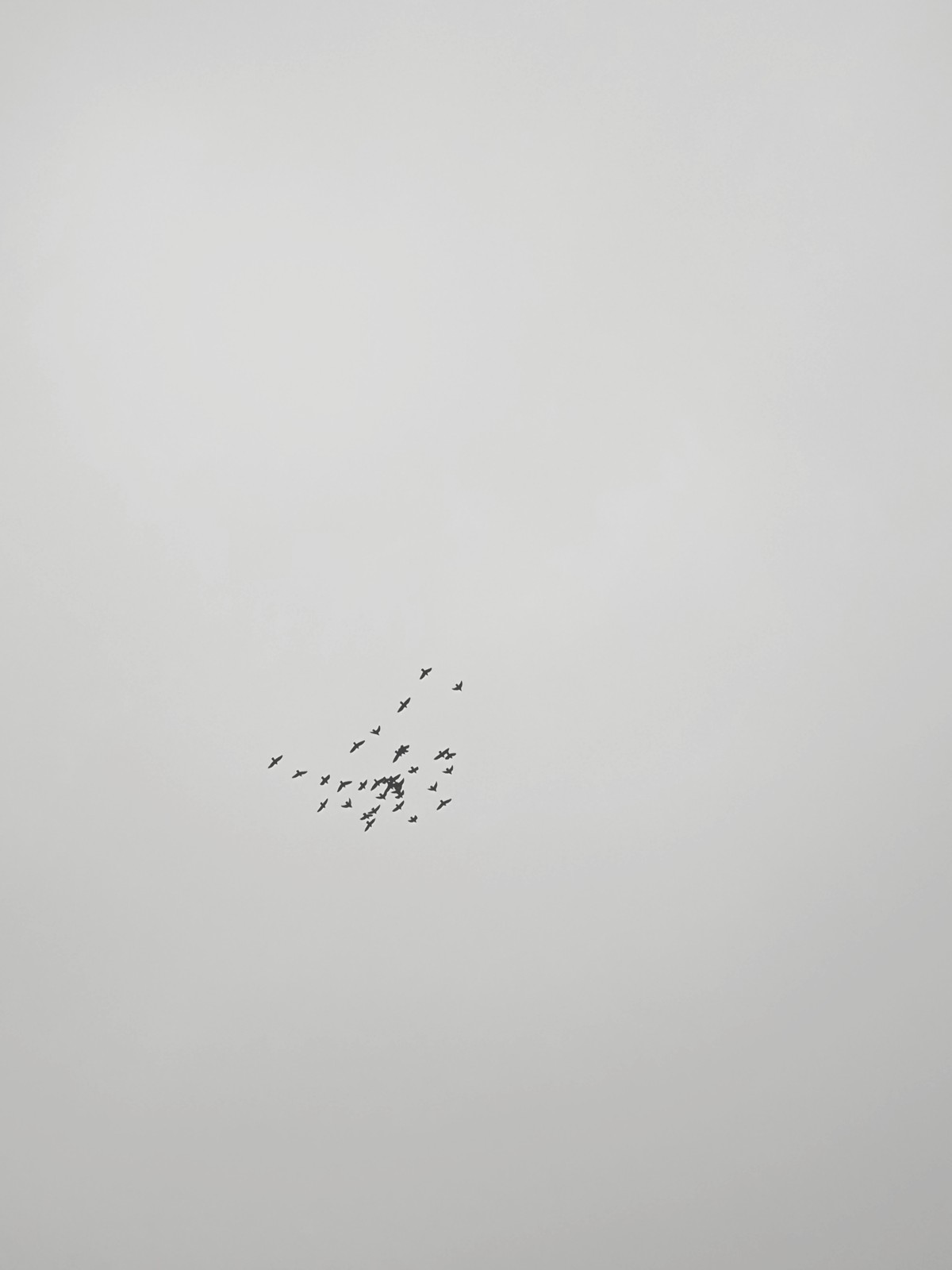
spotted the flying bird abruptly quivering in midair
(2)
In pliable fluff
lies a vigilant person
who sits up and brushes the threads
toward an orderly vision
(I don’t know if it’s better to add the punctuation. The person in this poem is unisex. )
Translation with original text:
昏睡在灰色里
Slumbering in grey
(1)
午睡,惊愕地醒来
Taking a nap, coming to aghast
瘦削的人
the lean one
在灰暗的阴影里
in the shadow of gloominess
用无光的眼眸
with empty eyes
看见飞鸟在空中骤然一颤
spotted the flying bird abruptly quivering in midair
(2)
软弱丝絮里
In pliable fluff
躺着一个警醒的人
lies a vigilant person
拨拉着丝线
who sits up and brushes the threads
向一个有序的景象
toward an orderly vision
Reflections:
Last night I posted my English diary for the first time and gratefully received precious corrections. After a dreamy trip in HZ, I came back home and unconsciously slept from 12 am to 12 pm for three days. My daily routine became irregular since then and I had felt unbelievably energetic at midnights during last week. Magically, maybe because of some tedious dreams, I woke up earlier than before this morning.
Trying to translate my own poems into English had been a blurring thought in my mind for a long time. But I can’t find a precise reason to explain why it was postponed. One of the reasons was that I didn’t know where I should post them. It seems too formal to post poems on social medias. This is not a time for poets, long posts, and quiet thinking, as many said. Almost everyone is keen to read funny things, including myself.
By asking deepseek to offer some words in English, I chose some words as the most suitable ones as I considered. One of the problems is that although modern poetry comes from Europe as many know, we had also started to learn and accept this form of poetry, which differs from our traditional poetry in many aspects; however, when we write modern poetry with some skills that we learned from those famous poets (no matter where they come from), there must be something different emerges. Unfortunately, I don’t have enough linguistic knowledge to explain this in detail. What I found was that I like to separate verses by absorbing some skills in European modern poetry, somehow when I translated them into English, the rhythm, or to be more precise, the cadence or the way of punctuating, inevitably became unnatural. It’s all because of the difference between languages, especially almost all of the modern poetry I read were translated versions instead of original.
It is necessary to state that the translation I posted is not 100% original because I’ve used AI for practice, and I don’t suggest providing all our works to AI just for advice since it’s safety and ethics are still a controversial issue. But the Chinese version is my original from when I was a teenager, and all these are only for exchanges of language learning experiences.