Today I'm going to share with you 3 books I read in the past few years and liked. Unfortunately, I don't read often. Usually, I read the beginning of the book and never open it again :/ It's the story of my life, again and again.
The books I'm sharing today have been read in French. I will be happy to receive some suggestions to read in English. Which books do you recommend to me? I like stories inspired by real facts, fiction, biography, fantasy, and thriller/crime.
Let's talk about the first book I wanna share:
- Kukum by Michel Jean. Michel Jean is a journalist and writer. He is from Quebec and is a part of the Innu community. I read Kukum before moved to Canada. I keep memories from this book. Beautiful story with tragic events.
Kukum is based on his own great-grandmother: Almanda Siméon. Almanda meets an Indigenous man, Thomas, and falls in love with him. She decides to follow him and learns his language and his traditions. I remember a moment in the book where the government wanted to destroy their house because they're planning to build a railway line.
This novel also includes pictures and maps to show us where the story takes place (in Quebec) and a photo of Almanda and her family.
- I also recommend the book Qimmik from Michel Jean. It's about a pretty unknown story (for me at least): the forced sedentarization of the Inuit during the 1960s and 1970s, in the territory of Nunavik, Canada. A history marked by the massacre by police of thousands of Nordic dogs (called qimmik). We often say that dogs are the best human friends. For Inuit, they were the way to survive. They helped them to find food and helped with hunting and fishing in a really cold area (Nunavik).
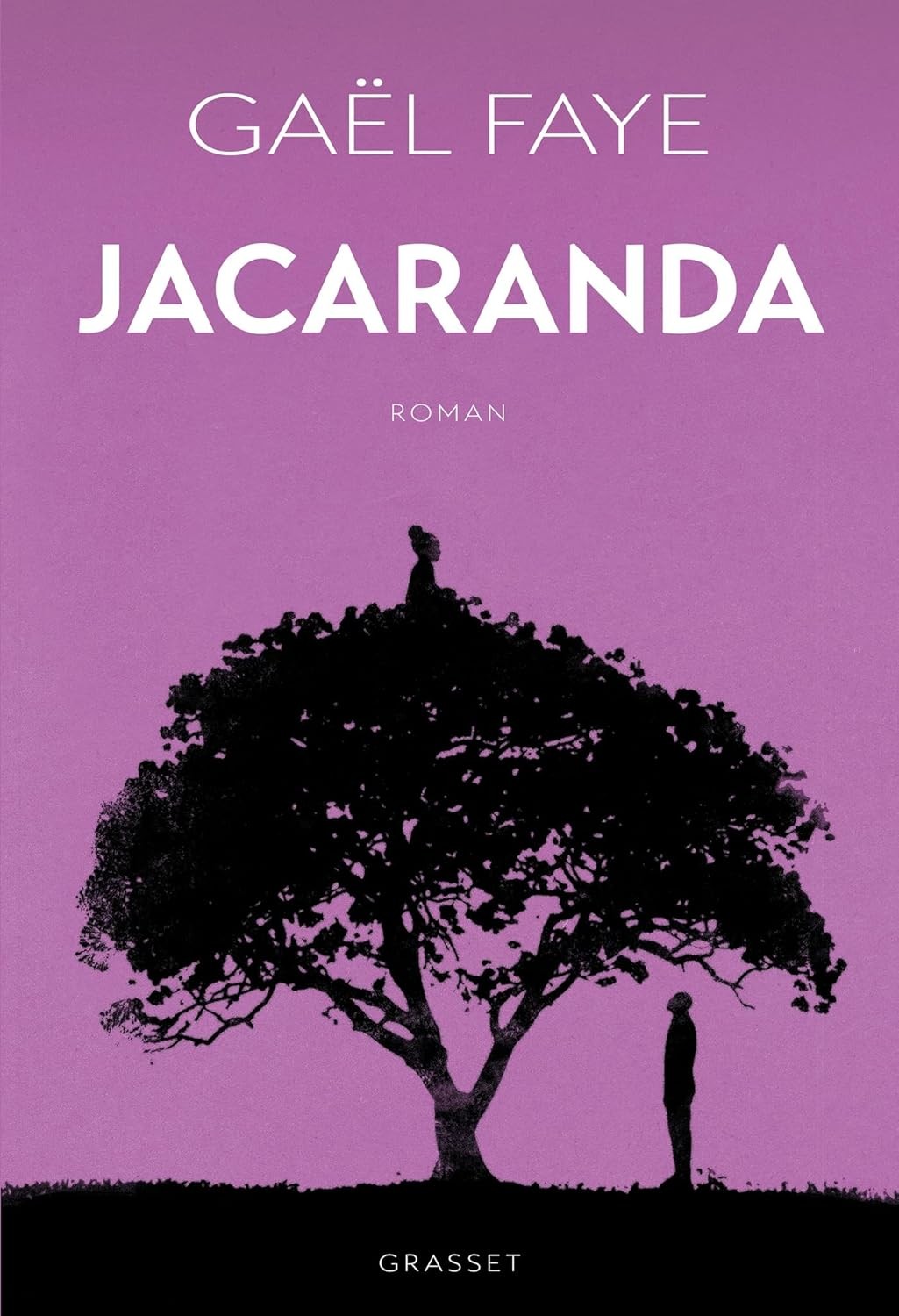
- The second book is Jacaranda by Gaël Faye. Gaël Faye is a singer and writer, born in Burundi from a Rwandan mother and a French father. He moved to France at the age of 13.
His first book is called Petit pays, is not an autobiography but is clearly inspired by his history. It's also a song.
Petit pays was published in 2016, I was in high school and borrowed it at the school library (didn't finish it).
In 2024, his second book, Jacaranda, was published. This is not an autobiography either. I bought it last year.
The book is about a young Franco-Rwandan boy who lives in Versailles, France, in 1990s.
He will hear about the genocide in Rwanda and will begin to question his family history. His Rwandan mother will refuse to answer his questions (it's a traumatic story for her, of course). Then, at the adult age, he will decide to travel to Rwanda and discover by himself.
This book is a story of silence, the search for identity, and Rwandan youth. 70% of Rwanda's population was born after the genocide.
I haven't finished this book yet. The chapters are short and easy to read but are like a roller coaster. I feel like most of the chapters I read finish with an emotional part. I can't explain well.
I like Gaël Faye's work as a singer or writer.
That's already more than 3 books, but I'm going to share 2 more books that I bought at a French-language book event a few months ago.
- Le magasin qui n'ouvre que les jours de pluie by You Yeong-Gwang.
As the book's title suggests, it's the story of a shop that only opens on rainy days. But it's a shop where you have to be invited. To be invited to have to write a letter and share your misfortunes. The goblins who run the place choose you and, in exchange for your visit, offer you great happiness. When you're lucky enough to go to this shop, you have to find what brings you joy, but you don't have much time, as the shop closes when it's not raining. The book even includes a little invitation card, as if the reader is invited. I appreciate that.
- Then, the real last one book for today is Un printemps au goût de mochi by Sawako Natori.
In a small train station, there's a bookstore where you're sure to find the book you need. When Fumiya hears this rumor, he immediately thinks about the book he's been looking for for years. Arriving at the library, he meets the bookstore's three employees: Makino, the boss; Waku, the owner; and Sugawa, the bookseller.
At first, Fumiya doesn't seem convinced by this supposedly extraordinary place, despite the café area, the dedicated booksellers, and the mysterious basement. But Fumiya doesn't know that, when you enter the Bookstore, problems seem to disappear as by magic.
Those last two are really chill books, at least until I have already read. Yes, I started reading both books in parallel.
I was like you. I was not used to read too much. However, since I stop accessing social midias my taste for reading came back, Last year I broke my record reading 14 books, I suggest you do the same.
So, about the books I really loved your recommendations. Mainly Le magasin qui n'ouvre que les jours de pluie by You Yeong-Gwang and Un printemps au goût de mochi. I liked the most, I m not into biographies but seemed interesting your suggestion.
I m not a native english speakers but for me looked extremally good.
Lovely post, great writing, keep it up🙏 I enjoyed reading it.