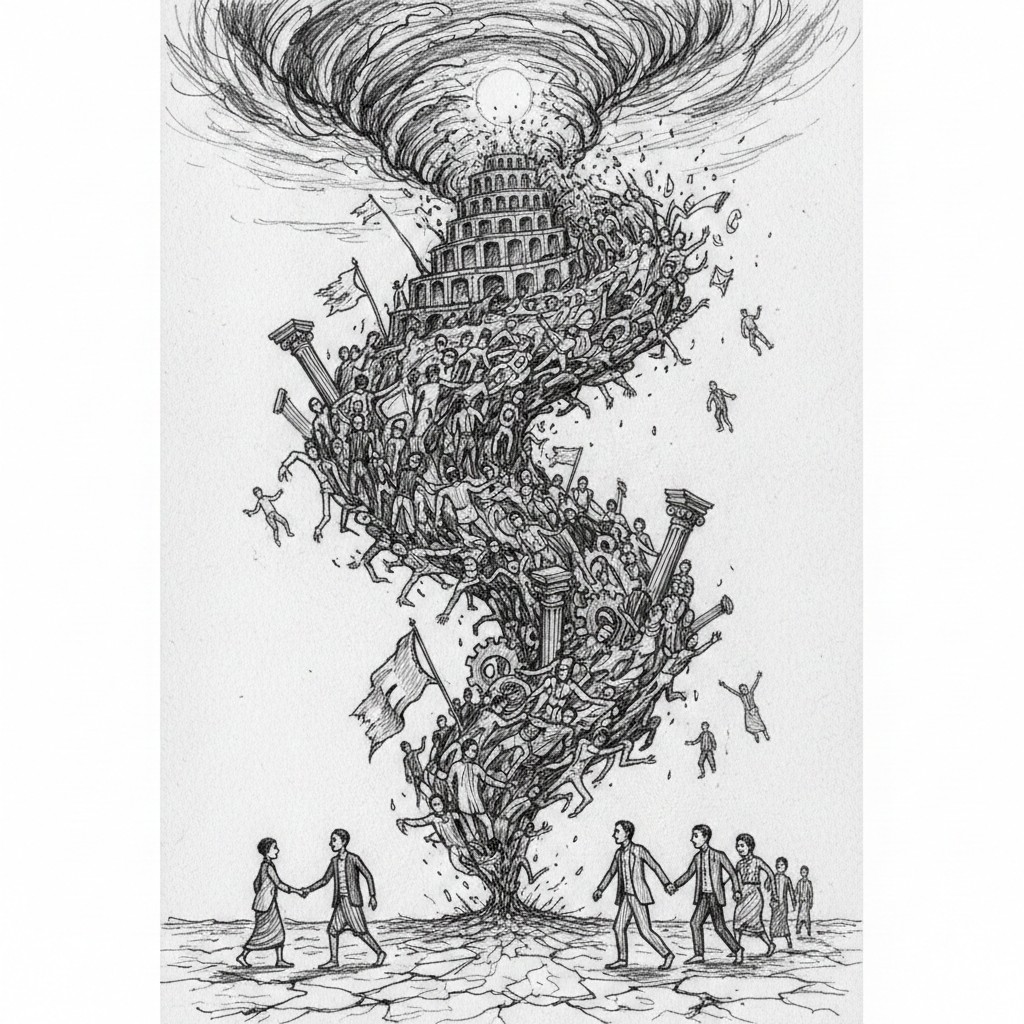
If you want to achieve your goal quickly, travel alone; but if you want to reach a distant goal, then prepare together. That is an African proverb that I find fitting for situations in any era. Human beings need other human beings to achieve and maintain their goals. This need encourages people to form groups, depend on one another, and build cooperation.
From these groups arise efforts to accumulate strength, build civilization, and create shared standards of living that are considered ideal. This process then forms power that continues to strengthen as more individuals come to join, believing that their personal needs can be fulfilled through the group they follow, and in order to achieve a shared standard of independence.
This pattern of gathering and consolidating strength is not only universal but also evident in the history of Indonesia. Indonesia became a country that seized its own independence through a similar collective force. In the 1920s, many new organizations were born with the aim of uniting intellectually driven youth of the nation from diverse sources of knowledge.
Some of them conveyed ideas of nation-building that gradually became more formally established through political parties, such as PNI (the Indonesian National Party) and PKI (the Indonesian Communist Party), as well as other political ideas that would later give rise to post-independence parties.
The crises that emerged prior to independence—economic crises and inflation—became a means for implementing these ideas. These conditions encouraged competition in the application of ideas, which ultimately gave rise to conflicts of interest as each sought to reach the same ideal standard of Indonesian independence at that time. The sparks of revolution spread and continued to color the nation’s journey until the declaration of Indonesian independence.
These organizations then continued to cultivate their long-term objectives until a phase emerged in which instruments for simplifying the party system, strengthening parliamentary stability, and directing public representation were introduced. The system of government became the subsequent objective of an organization. Each individual within it continued to maintain stability and carry out regeneration in order to preserve leadership within the collective, which then became the same recurring pattern for attaining power that had previously been formed from ideal standards born out of moments of crisis and national independence.
Human beings tend to seek those who resemble them, form small groups, merge them into larger ones, and then preserve their groups. From there, they produce successors to their efforts and carry them toward the highest standard of the ideal they believe in. This tendency to gather has become a recurring pattern throughout history, from the beginning of Adam and Eve building civilization, until the eventual emergence of ever more groups, each with its own purpose.
The history we know today is born from various moments and the actors behind them. Everything begins with a single individual, then grows into multiple individuals until it becomes a group. Therefore, if today there is extremely rapid progress, remember that such progress can return to mere aspiration once the ideal standard has been reached and a moment of crisis arrives.
At that point, new individuals will become history, because just as history is conveyed to humanity, humanity itself writes it, and repeatedly names an individual until they are agreed upon as a figure in history.