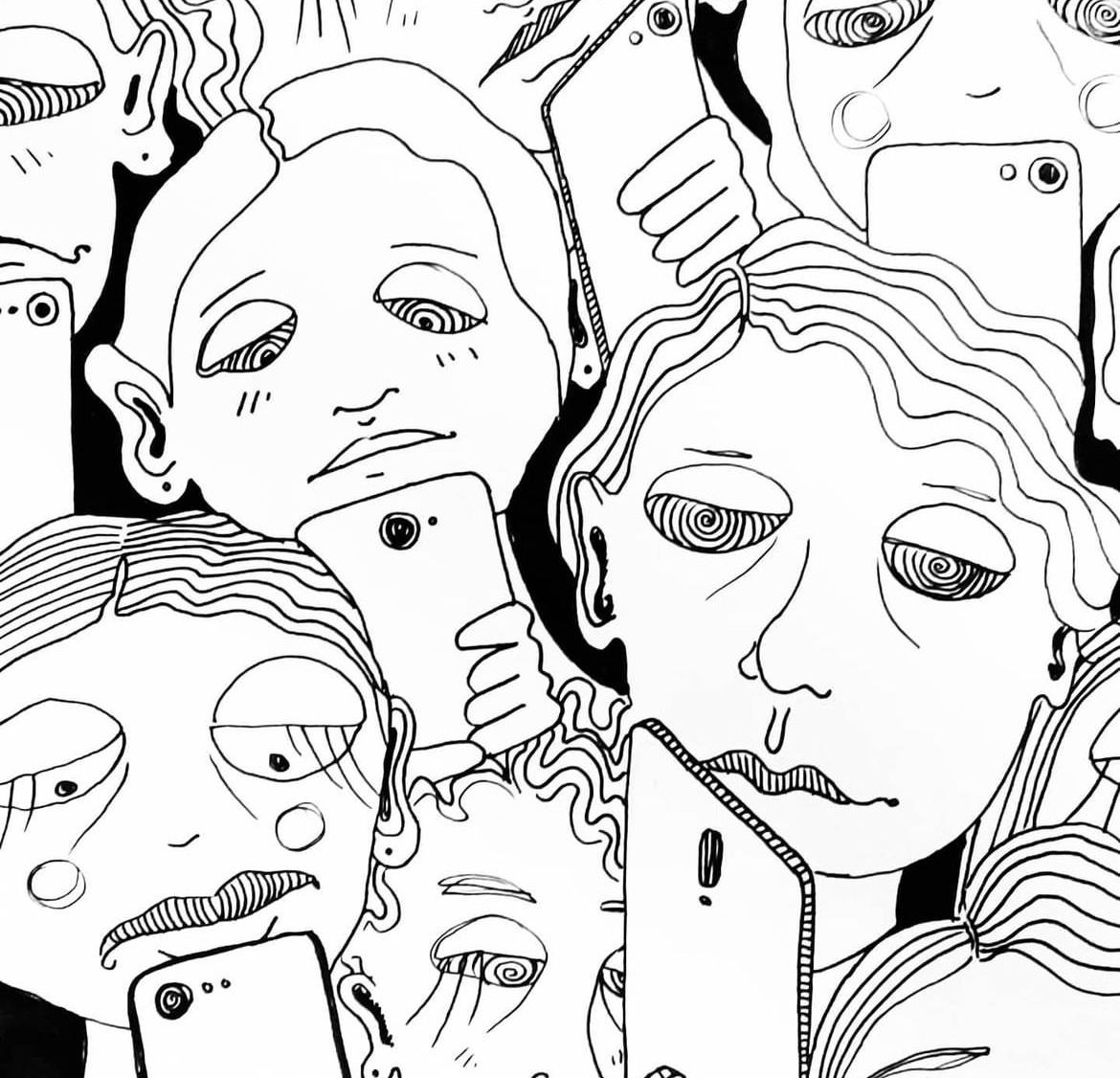
“History will always repeat itself” are words born from a deep exploration of the past. An economist seeks to understand how a medium of exchange originated, and what he finds are the characteristics of humans in that era, with their various ways of becoming what they want to be, such as saving, carrying out expansion, making predictions, and many other efforts to achieve their goals.
The expansions carried out by people in each era always follow different patterns, adjusting to the character of the people at that time. It feels as though every theory has already been discovered and has reached its climax, when in the past expansion was carried out through warfare to obtain territory, control its resources, and spread beliefs.
now it appears to be the same: everyone who seeks power multiplies their wealth through market warfare, controls its resources, and increases their followers. Everything truly follows the same pattern, and now I believe that “history will always repeat itself,” except that today we must face the progress of time with an extremely rapid acceleration of technology.
and so it is with the condition of my Instagram explore page now, which is filled with young billionaires who suggest learning it and convince others that history repeats itself. They strive to become the strongest using the currently agreed-upon tools for measuring power, not only money, but also new technologies that we cannot touch, smell, taste, hear, or even see.
They take the form of codes connected to a vast network and are governed by people without government involvement. Cryptocurrency is its name, a term derived from two words, Crypto meaning secret, and Currenc,y meaning money. It is a digital medium of payment that operates on a vast network called Blockchain.
Cryptocurrency has no physical form, but instead exists as a collection of codes that are recorded and verified by a network of computers. The security and continuity of this system are maintained by miners, people who run computers with special capabilities to process and validate transactions. From this process emerged the first widely known cryptocurrency, Bitcoin. Then, without much warning, several years after the emergence of Bitcoin, various other forms of cryptocurrency appeared that use different methods to record and validate ownership. There is Ethereum, which enables digital contracts to run automatically, Solana, which offers high transaction speed, and even memecoins like Dogecoin, which were initially created for entertainment.
Over time, these new forms continue to emerge, following the needs, ideas, and character of the communities that create them. This is reinforced by its value, which moves independently, unlike money in general, l whose distribution is regulated through Central Banks. Cryptocurrency has a different process in regulating its own value, adjusting to the form and network that are agreed upon. Therefore, with the diversity of its distribution systems, Cryptocurrency grows through decisions made by its community, governed by people rather than official institutions.
This makes its value unstable and influenced by many factors such as supply and demand, market sentiment, regulation, technological development, and market manipulation that can easily be carried out by those who understand how it works, or by other possibilities which, when narrowed down, ultimately depend on speculation that influences humans through social media.
Cryptocurrency is different from traditional money that is stored in wallets and placed in our pockets. Cryptocurrency wallets take the form of accounts used to store ownership codes, like data stored on our smartphones or on special hardware devices that can be connected to computers to carry out transactions or simply calculate their contents.
And because they take the form of unique codes, their finances are stored within the vast network previously referred to as Blockchain. I do not know whether history in the past also used methods as complex as this, but every pattern will be the same, such as the emergence of new forms of wealth that do not take a tangible shape, like Cryptocurrency.
Yet all of these patterns are now clearly visible through this digital system, where anyone who wishes to achieve power must possess its resources, or even become its inventor, like Satoshi Nakamoto, the creator of Cryptocurrency, who has remained undiscovered since 2009.
But what is clear is that whatever we choose to utilize to achieve our goals, even something as simple as buying luxury goods, retiring early, or perhaps becoming a respected person through wealth status, will require knowledge, not merely to know it, nor even to become an actor behind its implementation.

Very fascinating read ! Watch the capitalization and new sentence openers ; )
Thanks for your advice :) That means a lot