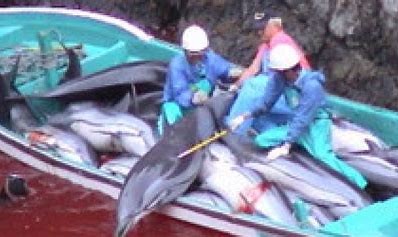
In 2011, two bottlenose dolphins named Shadow and Chelmers died in captivity at Connyland, Switzerland, after two days of 100-decibel ravings against their captors. Upon examination, traces of heroin substitute were found in their urine, suggesting suicide by self-suffocation due the stress of cruelty (Pix, 2022).
Shadow and Chelmers are only two of the 100,000 dolphin deaths occurring annually, and as an island country that relies heavily on marine resources, Japan contributes to more than 10% of total incidents (Hourston, 2018; WDC, n.d.). Lately, the Japanese Taiji hunts have been increasingly vicious, with thousands of dolphins captured and slaughtered. These mass dolphin executions not only cause extreme cruelty to the dolphins but also harm the environment and endanger local health while arousing the need for actions to stop this animal brutality and save the North-West Pacific dolphin population.
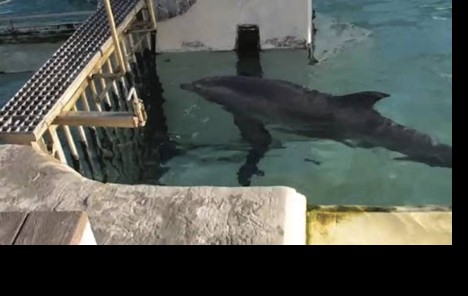
The Taiji hunts capture wild dolphins for performance, abusing their right to freedom and perpetrating dolphin cruelty.
In Japan, fishermen use very effective methods to capture huge numbers of dolphins. Every year between September and March, giant pods of dolphins travel past the Japanese eastern coast in their migration, and when the dolphins come, fishermen would line up boats to create a wall of sound that would scare the dolphins into a nearby cove (Juwita_Evan Lara, 2023). After that, the dolphins were easy pickings, and this way of using the dolphin’s acute hearing against them proved to be a very affective in capturing dolphins.
Indeed, the Japanese fishermen were very successful in capturing dolphins, with more than 750 captured over the past five years (McCurry, 2015). This efficiency in capturing dolphins adds to the danger of allowing such an industry to thrive.
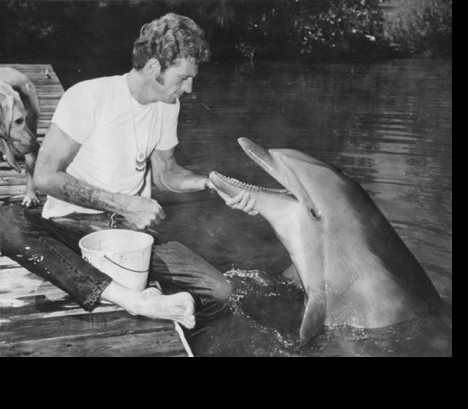
After capture, those dolphins would then be enslaved for performance that was equally as dangerous as the brutal process of being captured. The sound stress and exhaustion caused by performance along with the inadequate companionship combine to cause massive amounts of dolphin suicide in captivity, with only 48% of captive-born bottlenose dolphins surviving past one year (Juwita_Evan Lara, 2023; Rose, 2023). The severe mortality rate of captive dolphins shows that dolphins should not be captured or kept for performance, raising concerns against dolphin captivity.
One strong supporter for the act to stop dolphin captivity is Ric O’Barry, who had worked for the TV series Flipper and witnessed the death of the dolphin Kathy. In the documentary The Cove, O’Barry recalls that “She (Kathy) was really depressed…and she committed suicide in my arms…she swam into my arms, looked me right in the eye, took a breath and didn’t take another…she sank straight down on her belly in the bottom of the tank” (Juwita_Evan Lara, 2023). Clearly bothered by this shocking experience, O'Barry's account demonstrates the torturous ordeal of captive dolphins and the reality that this form of animal cruelty has to be stopped.
In addition to capturing dolphins, the Japanese Taiji hunts also kill huge amounts of dolphins, committing animal cruelty and disrupting the marine ecosystem.
When fishermen trap dolphins in Taiji’s secret cove, trainers will come to take the ones suited for performance, and then the fishermen would kill the rest in truly horrific ways. One of the vastly used killing methods is spinal cord transection, where fishermen repeatedly poke a metal rod behind the blowhole to sever the spinal cord of the dolphin, which usually dies after minutes of intense agony and struggle, turning the sea from green to crimson (Vermeulen, 2014). This brutal way of killing dolphins does not fall under any way accepted in the humane slaughter of large mammals and should not be further practiced on behalf of their victims.
Besides committing animal cruelty, the Taiji dolphin slaughter also harms the environment. According to the Animal Funds (n.d.), an average of 1,200 to 1,600 dolphins are slaughtered annually for meat in the Taiji hunts alone. The mass butchering has caused the dolphin population near Japan to decrease drastically, causing tremendous impacts on the local ecosystem.
One example of this impact on the environment is Japan’s fishing industry. Recent records have revealed that Japanese seafood production has dropped from 12.8 million tons in 1984 to 4.4 million tons in 2016 despite an advance in fishing technology (Nippon, 2018). The decline in seafood productivity indicates a decline in Japanese marine sealife and is evidence of dolphin slaughter's huge environmental impact. Furthermore, the Japanese government and authoritative organizations have been encouraging the development of these relentless dolphin killings.
One such organization is the International Whaling Commission (IWC), and because continuing the dolphin meat industry is in their best interest, IWC chooses to ignore the slaughter of thousands of dolphins and small cetaceans (Juwita_Evan Lara, 2023). The disregard of IWC is one of biggest factors that encourage the ever-increasing dolphin slaughter industry and the commission have the responsibility of preventing further encouragement and practice of the outrageous dolphin slaughters.
The most basic reason driving the ruthless dolphin hunts is money. Upon investigation, researchers estimate that one dead dolphin can generate about $600 in Japan with $15 per pound of meat (Macdonald, 2014). However, while fishermen are busily butchering dolphins for money, they should consider the dolphins' emotions and the impact depleting the dolphin population would have on the marine ecosystem and the future fishing industry.
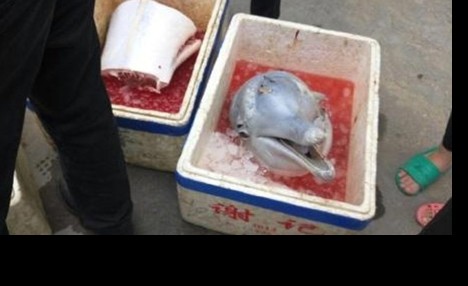
Furthermore, dolphin slaughter also causes numerous health issues. Every year, countless number of Japanese people consume dolphin meat. According to Wikipedia (2024), an estimated 150 kg of dolphin meat was served in Taiji school lunches in 1006 because dolphin eyes can potentially increase intelligence. Meanwhile, people do not realize that the consumption of dolphin meat served to students can cause fatal diseases.
The most dangerous substance in dolphin meat is Methylation, or mercury. Mercury is transmitted to waterways in massive quantities through pollution emitted by factories and travels up the food chain from prey to predator, turning dolphins into a toxic bomb that could contain up to 1833.8 mg/kg (Juwita_Evan Lara, 2023; Pompe-Gotal, 2009). This means that by killing dolphins and selling their meat, fishermen are basically poisoning themselves and the people around them.
Over the past decades, mercury poisoning from dolphins and other seafood has caused numerous outbreaks of severe disease. One such dolphin-meat-caused mercury disease was the Japanese Minamata disease, which could cause sensory disturbances, ataxia, hearing loss, and speech impairment that would lead to death (Juwita_Evan Lara, 2023). These severe symptoms are evidence of the health risks of taking in dolphin meat.
Besides deadly symptoms, the Minamata disease also had grim effects on society. According to the Japanese government, 2,955 people caught Minamata disease in 2001 (Ministry of Environment, 2002). The huge amounts of people affected by the Minamata disease negatively impacted Japanese locals and is a sign warning people to stop dolphin consumption.
Moreover, the Minamata disease has also had dreadful economic impacts. It is recorded that 22,000,000 yen ($138.6 thousand) had to be paid to cure Minamata disease for one patient, and by March 2001, the total money used spent amounts to up to 144 billion yen, or $907.2 million (Ministry of Environment Government of Japan, n.d.). Like the Covid 19, the treatment difficulty of the Minamata disease caused an economic crisis in Japan and points to the severe impact of dolphin hunting, both socially and economically.

Due to the fact that Japanese Taiji hunts cause environmental, social, and economical problems while committing animal cruelty, these annual hunts need to be stopped. Since publishing the documentary, The Cove and the unmasking of the gruesome Taiji hunts, a lot of people have been inspired to take part in the movements against dolphin killing around the world, making the number of dolphins captured and slaughtered decline 60% from 2,300 in 2009 to 1,380 in 2023 (McCurry, 2009; Palmer, 2023). But despite the progress achieved, current efforts are not enough to completely cease the Taiji dolphin hunts, and that is why we need you to be the salvation for the dolphins in Japan, Taiji.
What you can do:
1. Donate to Ric O’Barry’s dolphin rescue project.
2. Join a boy scout against dolphin performance and take the pledge to not buying a dolphin show ticket.
3. Sign the petition asking the Japanese government to prohibit the dolphin slaughter once and for all!
4. Watch documentaries like "The Cove" and share information on social media to raise awareness.
5. Publish articles on social media to educate others about the Taiji dolphin hunts.
— “The Taiji dolphin slaughter begins every September…Unless we stop it.” (Juwita_Evan Lara, 2023)
— “Help us make this generation of captive whales the last…no breeding, no more captures, no trade and enhanced welfare conditions for those remaining in tanks.” (Pix, 2022)
— “Japan can be even more beautiful without slaughter and captivity…Say no to captivity and slaughter…Let them free!” (TAF - The Animal Fund, 2020)
Work Cited:
Hourston, J. (2018, September 7). Stop the hunt of dolphins and small whales. Change.org. https://www.change.org/p/stop-the-hunt-of-dolphins-and-small-whales
Juwita_Evan Lara. (2023, February 8). The Cove - Documentary - Richard O'Barry | Louie Psihoyos [Video]. YouTube. https://www.youtube.com/watch?v=eURsF_3Rmis
Macdonald, J. (2014, February 12). TAIJI DOLPHIN SLAUGHTER: CULTURE OR CRUELTY?. Scuba Diver Life. https://scubadiverlife.com/taiji-dolphin-slaughter-culture-or-cruelty/
McCurry, J. (2009, September 14). Dolphin slaughter turns sea red as Japan hunting season returns. The Guardian. https://www.theguardian.com/world/2009/sep/14/dolphin-slaughter-hunting-japan-taiji
McCurry, J. (2015, May 20). Japanese aquariums vote to stop buying Taiji dolphins. The Guardian. https://www.theguardian.com/world/2015/may/20/japanese-aquariums-vote-to-stop-buying-taiji-dolphins-hunt
Ministry of the Environment. (2022). Minamata Disease The History and Measures – Summary. https://www.env.go.jp/en/chemi/hs/minamata2002/summary.html
Nippon. (2018, August 22). Japan Fishery Production Halved in 30 Years. https://www.nippon.com/en/features/h00267/
Palmer, M.J. (2023, November 1). Declines of Taiji Dolphin Populations Confirmed. International Marine Mammal Project. https://savedolphins.eii.org/news/declines-of-taiji-dolphin-populations-confirmed
Pix, J. (2022, October 4). Real stories from the dark side of captivity. WDC. https://uk.whales.org/2022/10/04/real-stories-from-the-dark-side-of-captivity/
Pompe-Gotal, J., Srebocan, E., Gomercic, H., Crnic A.P. (2009, December 6). Mercury concentrations in the tissues of bottlenose dolphins (Tursiops truncatus) and striped dolphins (Stenella coeruloalba) stranded on the Croatian Adriatic coast. Agriculture Journals. https://vetmed.agriculturejournals.cz/pdfs/vet/2009/12/06.pdf
Rose, N.A., Soller, A.S., and Parsons, E.C.M. (2023). The Case Against Marine Mammals in Captivity, 6th edition (Washington, DC: Animal Welfare Institute and World Animal Protection), 74 pp. https://awionline.org/sites/default/files/uploads/documents/23-CAMMIC.pdf
Taiji dolphin drive hunt. (2024, May 18). In Wikipedia. https://en.wikipedia.org/wiki/Taiji_dolphin_drive_hunt
The Animal Funds. (n.d.).The Taiji Dolphin Drives. https://theanimalfund.net/en/taiji-dolphin-drives/2
Vermeulen, E. (2014, March 7). Links Between the Murderers in Taiji and the Faroe Islands. Sea Shepherd. https://seashepherd.org/2014/03/07/links-between-the-murderers-in-taiji-and-the-faroe-islands/
WDC. (n.d.). SMALL WHALE AND DOLPHIN HUNTS IN JAPAN. https://uk.whales.org/our-goals/stop-whaling/stop-dolphin-hunts/small-whale-and-dolphin-hunts-in-japan/

Great text! Just a few errors. Thanks for posting!