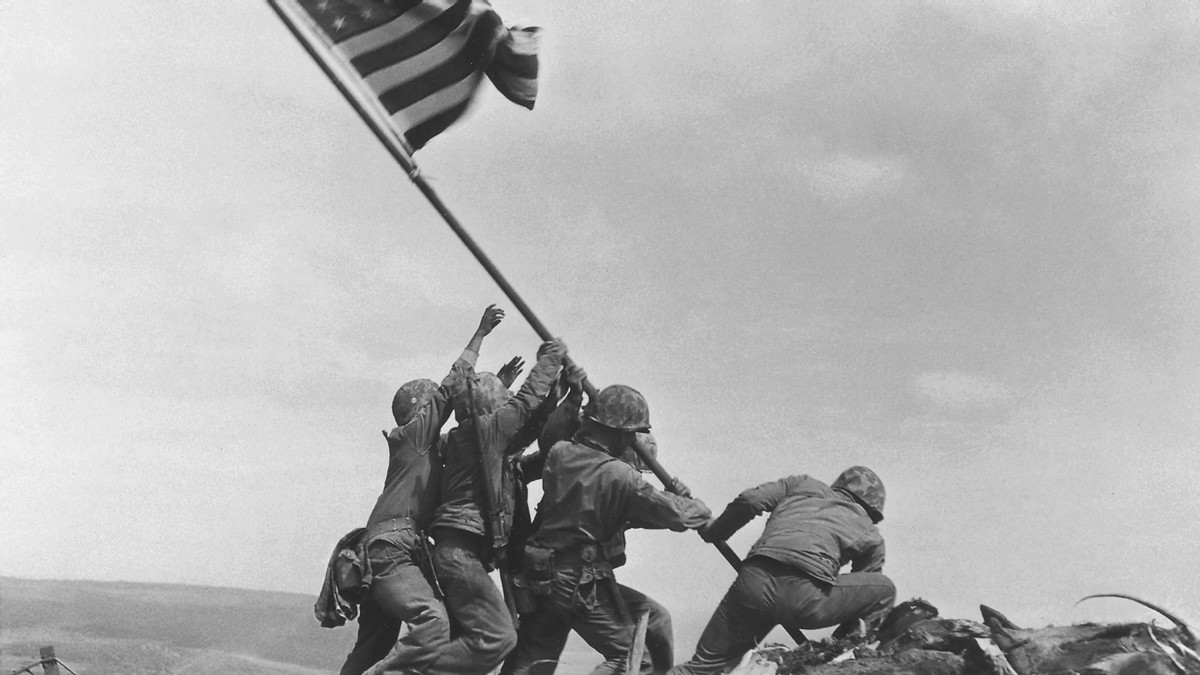
Upon reviewing the game of island leapfrog between American and Japanese troops during World War II, one can’t help but notice the peculiar fighting method of the Japanese soldier that had done so much to decimate the American fighting man. Guam, Peleliu, Iwo Jima, and Okinawa. These names are familiar to everyone. However, when I looked closer at the deadly battles that swept across these tiny islands in the middle of nowhere, I caught a glimpse of the looming shadow of the lethality of modern warfare.
Prior to the 18th century, Japan had been in complete isolation for millennia, and, as a result, had developed a culture completely different from Western religion and what some may consider as civilization. This society was dominated by the code of the Bushido, in which Japanese citizens believed in a glorious afterlife, with some even preferring it over reality.
Consequently, Japanese soldiers fought with a frenzy to give up their lives to take out several enemies with them. In World War II, the Japanese were notorious for their Kamikaze and Banzai attacks, in which dozens of men would throw themselves at enemy positions, tanks, and even bridges to blow themselves and the enemy up in one giant fireball. Even more frightening were the clouds of Japanese zeros that would dive bomb the American ships, with the planes acting as massive missiles, causing horrendous casualties to the American men and vessels.
In retrospect, the Americans were caught entirely off guard, with unprepared recruits and officers making matters worse. In fact, the U.S. 6th Marine Division suffered a total of 3,000 casualties just to take Sugar Loaf Hill, a heavily fortified Japanese outpost on the island of Okinawa (National WWII Museum, 2020).
What caught my attention about the Japanese fighting method in World War II was how much it resembled modern intelligent warfare. As I have mentioned, the Japanese heavily implemented the use of kamikaze attacks in WWII. However, if you turn your attention to the Russian-Ukrainian war, you'll see the Ukrainians doing just that to destroy Russian warships, only with drones this time instead of airplanes. In both cases, the attacker was hugely successful in dealing heavy losses to the opponent and punching high above their weight with one or more aircraft taking out an entire tanker.
Furthermore, the Japanese soldiers were also very successful in using a single man carrying explosives to take out heavy armor, and this is exactly what future warfare will look like. As artificial intelligence advances and becomes accessible, its implementation in military use will surely grow as well. By using simple robots laden with explosives to get near and destroy personnel and armor, soldiers can now kill the enemy with little or no cost to themselves, making the future battleground ten times as bloody and gruesome as those before. As one YouTube video said, the cost of killing will plummet, and with it, killing efficiency will skyrocket, creating apocalyptic consequences in future warfare.